
Last updated November 15, 2026
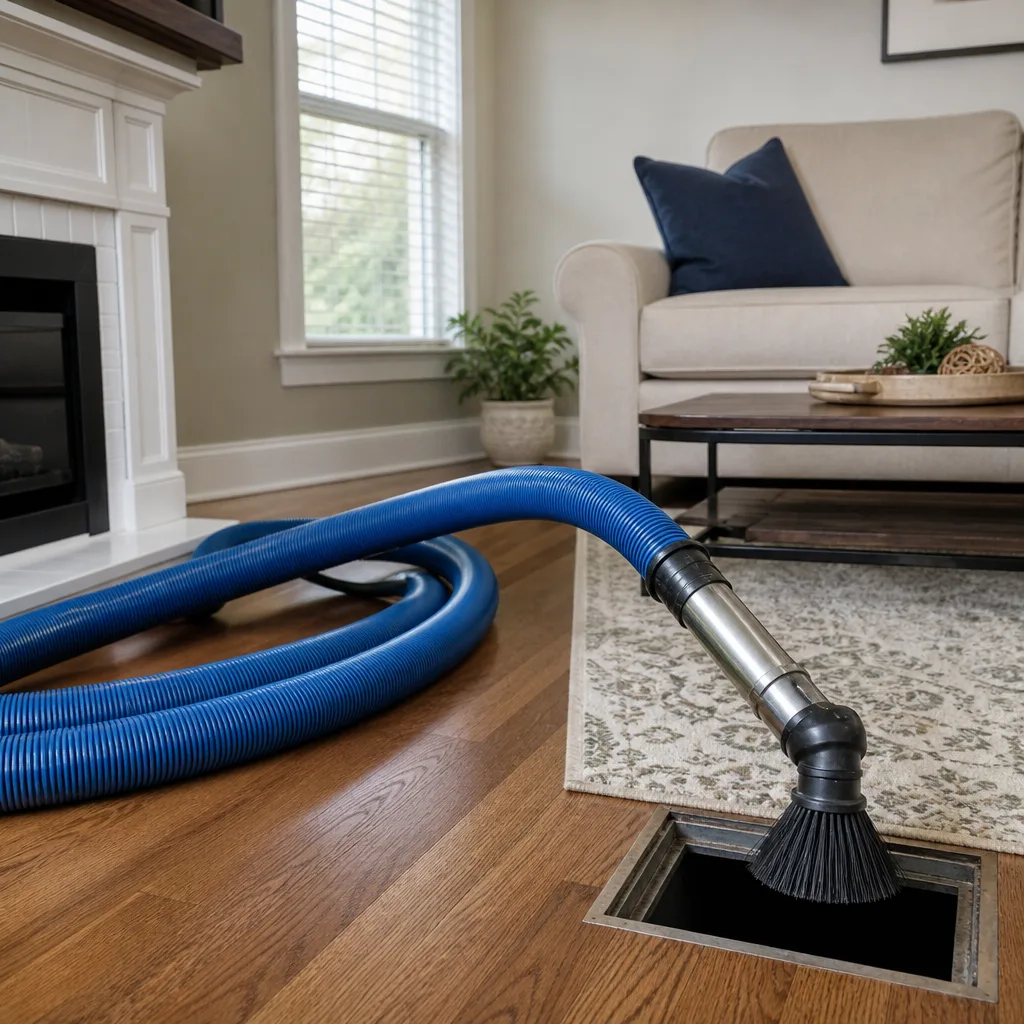 Whole-home duct cleaning
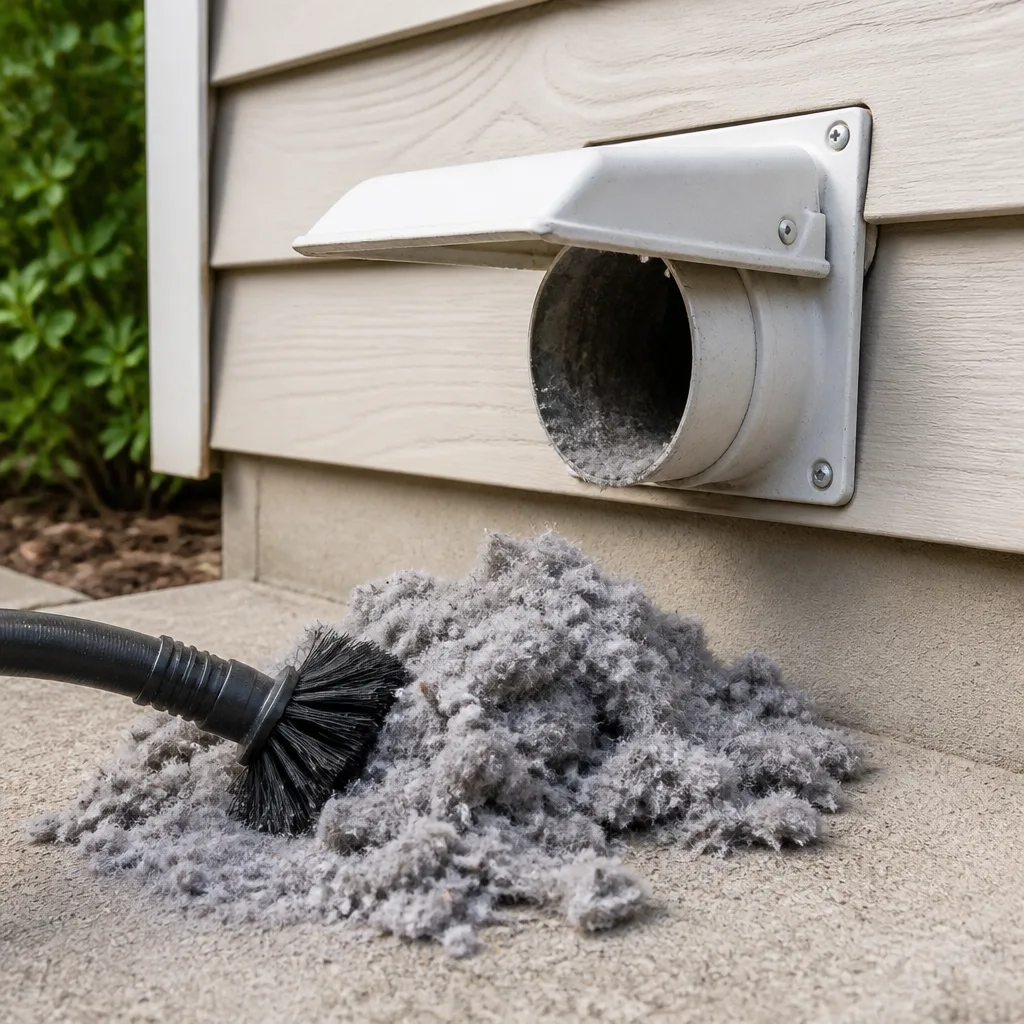 Dryer vent cleaning
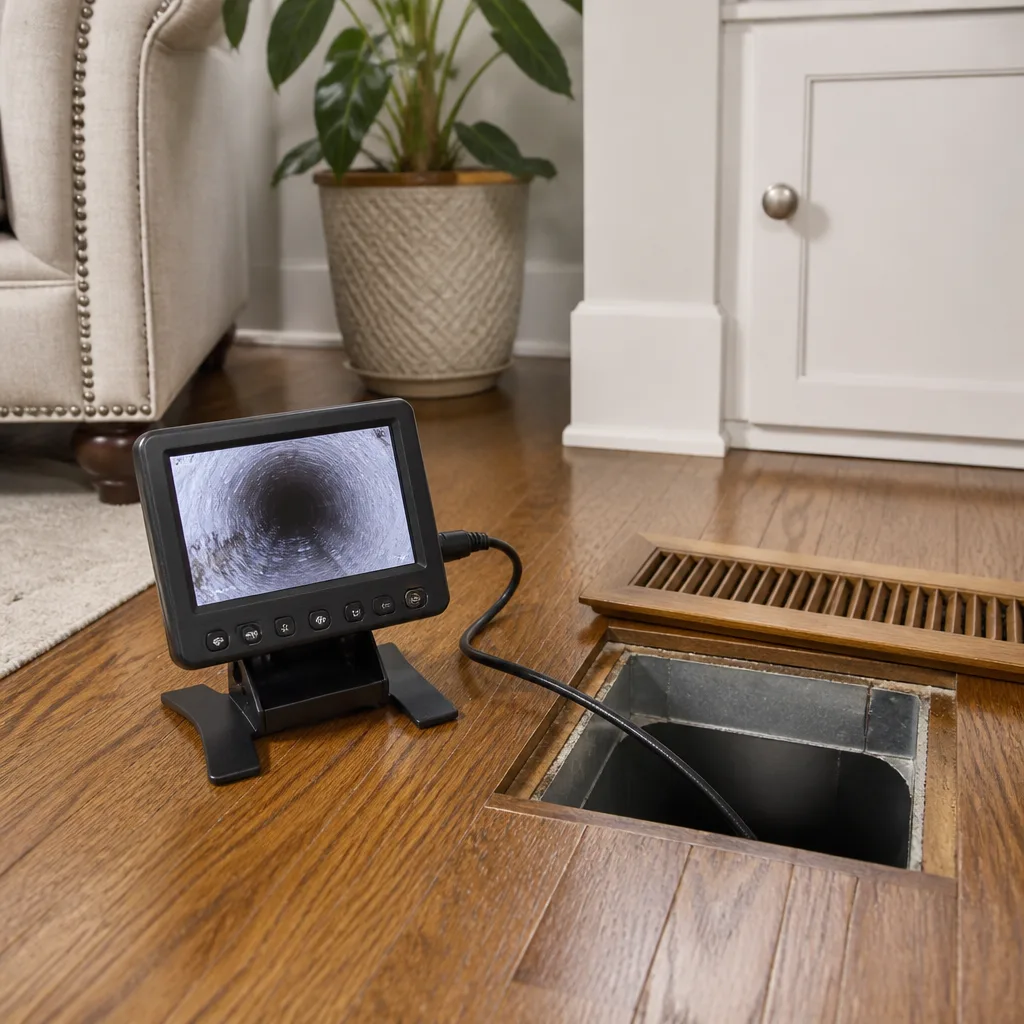 Camera inspection
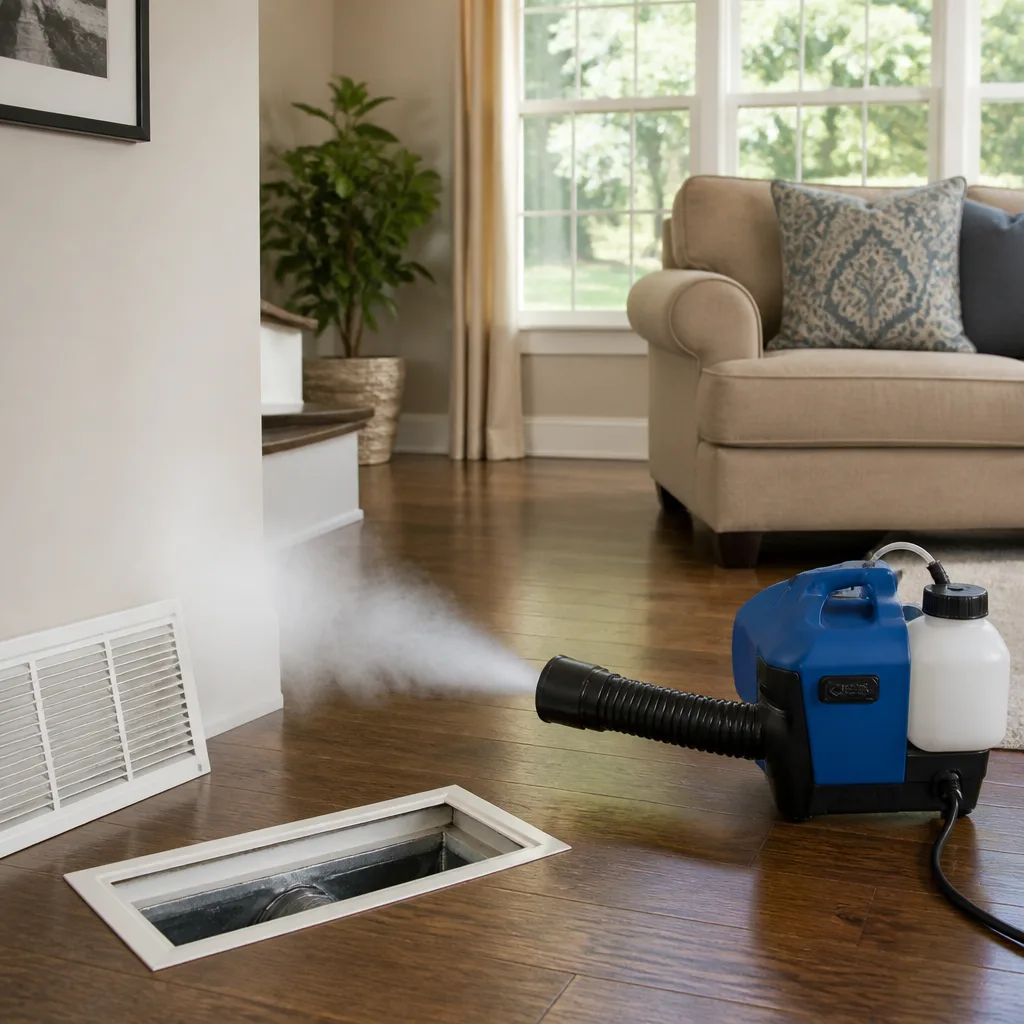 Sanitizing & deodorizing
Whole-system duct and dryer vent check with before-and-after photos - you see exactly what came out of your vents
That "$99 whole-house special" is a bait ad - the real number appears once they are in your hallway, or the "clean" is a shop-vac at the register. We photograph the inside of your ducts before and after instead.
Air Duct Cleaning Maintenance Schedule: What to Do and When
The 3-to-5-year duct cleaning interval that gets repeated everywhere was never meant to be a universal rule. It’s a baseline that assumes nothing changed in your house, your HVAC system, or your filter habits since the last cleaning. In Fort Wayne, plenty changes: basements get finished, pets join the household, filters get skipped for a season, and humidity swings push moisture into places ductwork doesn’t easily dry out. A maintenance schedule that ignores those triggers will be wrong for most homes. This guide covers what to check, when to schedule, and how to extend the interval between professional visits.
Quick Answer
Most Fort Wayne homes should have ducts professionally cleaned every 3 to 5 years as a baseline, but that interval compresses to 1 to 2 years when there are trigger events: a renovation, a new pet, a finished basement, an HVAC replacement, or a water intrusion near ductwork. Between professional cleanings, check your filter monthly, watch register dust patterns, and keep return grilles clear. An event-triggered schedule beats a purely calendar-based one every time.
Styles & brands we work with
- Whole-home duct cleaning
- Dryer vent cleaning
- Camera inspection
- Sanitizing & deodorizing
Table of Contents
- What’s the baseline duct cleaning interval?
- What events should trigger an earlier cleaning?
- What should you check between professional cleanings?
- How does Fort Wayne’s climate affect duct maintenance?
- What maintenance tasks extend the cleaning interval?
- Why should duct sealing and cleaning happen on the same visit?
- How does dryer vent maintenance fit the schedule?
- What can you do yourself, and what needs a professional?
What’s the baseline duct cleaning interval?
Every 3 to 5 years is the right starting point for a typical single-family home with no unusual contamination source. That figure comes from indoor air quality guidance that assumes normal occupancy, functional filtration, and no recent construction. It’s a floor, not a ceiling. Homes with heavy pet dander, an occupant with respiratory sensitivity, or a history of moisture problems usually need the shorter end of that range or below it.
Two things determine where your home falls on that spectrum:
- Occupancy and sensitivity. A household with allergy sufferers, young children, older adults, or multiple pets generates more particulate load inside the ducts than a two-person home with no animals.
- System condition. Ducts with leaky joints, disconnected runs, or missing boot seals pull attic and crawl space air directly into the supply stream. That accelerates contamination regardless of how clean the household is.
In our experience across Fort Wayne homes, the houses that go longest between cleanings without problems are the ones with tight ductwork and a filter that actually gets changed on schedule. The houses that need cleaning sooner almost always have a physical reason: a gap somewhere, a filter that was undersized, or contamination introduced by an event rather than time.
If you’re starting from no known history, treat the first professional cleaning as a baseline assessment. A proper air duct cleaning visit should include before-and-after documentation of what came out of the system, which gives you a reference point for every future decision.
What events should trigger an earlier cleaning?
Calendar time is one input. Events are the other, and they’re usually the more important one. Any of the following should move your next cleaning up, regardless of when the last one happened:
- Renovation or remodeling. Drywall dust, sawdust, and insulation fibers from a kitchen remodel or basement finish migrate into return ducts within days. Clean after the project is done, not during.
- A new pet, or a change in pet count. Dander is fine enough to bypass standard filters and settle inside duct runs. Two dogs instead of one is a real change in load.
- Finishing a basement. This is the most common trigger in Fort Wayne. New conditioned space means new ductwork, new returns, and construction debris that needs to be cleared before the system runs normally.
- HVAC replacement or major repair. A new air handler or a blower replacement disturbs settled debris throughout the system. Clean after the equipment work, before regular operation resumes.
- Water intrusion near ductwork. A sump failure, a roof leak, or a burst pipe that wets duct insulation creates a mold risk that no amount of filter changing addresses.
- Moving into a previously occupied home. You have no idea what the previous occupants did. A baseline cleaning is the only way to know the starting condition.
Notice that most of these are one-time events with a clear “before” and “after.” A schedule built around them is easier to follow than a vague five-year reminder, and it catches the contamination that actually matters. If you’re planning a project in Fort Wayne this year, book the cleaning for after the dust settles, and read our guide to Duct Cleaning Fort Wayne for what a full-system visit covers.
What should you check between professional cleanings?
You don’t need equipment to catch most problems early. Four checks, done monthly and after any event, will tell you when to call and when to wait.
Filter condition
Pull the filter and hold it up to light. If you can’t see through it, it’s overdue. A filter that loads up faster than usual after a change is a signal that something upstream is generating debris. Note the date you changed it, not just that you changed it.
Register dust patterns
Look at the supply registers and the ceiling or floor around them. Even, light dusting is normal. Dark streaks radiating from a register, or a visible line of dust at the edge of a diffuser, usually means air is escaping around the boot rather than through it. That’s a duct repair conversation, not a cleaning one.
Static pressure readings
If you have a smart thermostat with static pressure reporting, watch for a gradual rise over a few weeks. Rising pressure with a clean filter often points to a restriction somewhere in the system: a collapsing flex run, debris blocking a return, or a damper that shifted. A sudden jump after a renovation is almost always construction debris.
Smell and moisture
A musty smell when the system starts, or condensation on duct surfaces in a basement, means moisture is present. Moisture inside duct liner is the one condition that rarely resolves on its own and should be looked at promptly.
Write these observations down. A simple log of filter change dates, register observations, and any trigger events gives a technician real information to work with and helps you avoid cleaning too often or too late.
How does Fort Wayne’s climate affect duct maintenance?
Fort Wayne’s humidity swings matter more than most homeowners realize. Summers bring stretches of high dew point, and winters run dry with long heating seasons. That combination creates two distinct pressure points inside ductwork.
Summer: Air conditioning coils condense moisture, and any duct run in an unconditioned basement or crawl space stays damp for weeks at a time. Duct liner, the fibrous interior some older systems use, holds that moisture. In a consistently dry climate, liner stays marginal; here, a slow leak or a poorly sealed boot can keep a section of liner damp long enough for biological growth to take hold. That’s why a musty smell in a Fort Wayne basement is worth investigating rather than ignoring until the next scheduled cleaning.
Winter: The long heating season means the system runs more hours per year than in milder climates, moving more air and more particulate through the same ductwork. Dry winter air also raises static electricity and makes fine dust more mobile. Homes here tend to accumulate dust in ducts faster than the calendar interval would suggest.
Spring and fall: The transition periods are when basement moisture problems show up. Humidity drops, then the first humid stretch hits, and any duct surface that stayed cool all winter starts condensing. This is the best time of year in Fort Wayne to check for moisture in the basement ductwork before the cooling season begins.
None of this changes the baseline interval. It changes how carefully you watch for moisture, and it makes professional-grade extraction more important than a surface vacuum. If you want a system assessed against what Fort Wayne weather actually does to ductwork, start with a Fort Wayne service visit and get a real condition report.
What maintenance tasks extend the cleaning interval?
A few habits genuinely stretch the time between cleanings. None of them replace professional cleaning, but they slow contamination and make each visit count more.
- Size the filter correctly. A filter that’s the wrong thickness for the slot, or too restrictive for the blower, either leaks air around the edges or starves the system. Get the exact dimensions and match the MERV rating to what your equipment can handle.
- Seal supply boots to the floor or ceiling. Gaps around boot openings let unconditioned air into the supply stream. A bead of duct sealant closes them and reduces both dust infiltration and energy loss.
- Keep return grilles clear. Furniture, rugs, and storage boxes blocking return grilles force the system to pull air from leakier paths. Clear space around every return.
- Change the filter on a schedule, not a reminder. Most homeowners wait for a thermostat prompt that never comes. Put the date on the filter frame itself.
- Close the system during renovation. Tape off supply registers and turn the air handler off while drywall dust is flying. This alone prevents the heaviest contamination events.
Combine these with the event-triggered schedule above and many Fort Wayne homes can comfortably sit at the 5-year end of the baseline rather than the 3-year end. The homes that can’t are usually the ones with duct leaks nobody addressed.
Why should duct sealing and cleaning happen on the same visit?
Cleaning a leaky duct system and sealing it later treats the same problem twice. Debris enters through the leaks; cleaning removes the debris but leaves the openings. Within a heating season, the ducts are pulling dirty air again. Scheduling the repair with the cleaning solves the root cause in one pass instead of two.
There’s a practical reason too. When a technician is already on site with professional equipment, access to boots, joints, and return plenums is already open. Sealing those points during the same visit is far less disruptive than scheduling a second appointment, and it means the cleaning results hold. This is where air duct repair earns its keep: it’s the difference between a clean system and a clean system that stays clean.
Professional-grade extraction equipment matters here as well. Rotobrush and Nikro systems are built for contractor work: rotary agitation, high-volume negative pressure, and containment. Consumer-grade portable units move far less air and can’t maintain the pressure differential needed to capture what they loosen. The equipment is how a technician establishes the “before” condition, and how before-and-after photos of your own ducts prove the work was done.
If your ducts are older, or you’ve never had them inspected, ask for a condition assessment alongside the estimate. A leaking joint found and sealed during a cleaning is one of the cheapest repairs in home maintenance.
How does dryer vent maintenance fit the schedule?
Dryer vents follow a different schedule than supply and return ductwork, and they carry a real fire risk. Lint accumulates in the exhaust path faster than most homeowners expect, and a restricted vent makes the dryer run hotter and longer. Annual inspection of the vent run is the sensible baseline, with cleaning as needed.
Signs it’s time:
- Clothes take longer than one cycle to dry.
- The dryer body or the wall behind it feels hot to the touch.
- The exterior vent flap doesn’t open strongly during a cycle.
- Lint is visible around the vent hood outside.
This is a dedicated service, not an upsell tacked onto a duct cleaning. A proper dryer vent cleaning runs the full length of the vent, clears the transition duct behind the dryer, and confirms airflow at the exterior hood. It’s worth putting on the same annual calendar as the furnace filter check.
What can you do yourself, and what needs a professional?
Some maintenance is genuinely homeowner-level. Some isn’t, and forcing it creates more problems than it solves.
Homeowner-level tasks:
- Changing and documenting filters.
- Cleaning register covers and grille faces.
- Keeping returns clear of furniture and storage.
- Visual inspection of ductwork in accessible basements and attics.
- Noting dust patterns and smells in a log.
Professional-level tasks:
- Full-system cleaning with commercial extraction equipment.
- Sealing joints, boots, and plenum connections.
- Assessing and repairing damaged flex runs or crushed ducts.
- Evaluating moisture in duct liner and applying treatment where needed.
- Dryer vent cleaning along the full run.
Don’t run brushing tools or shop vacuums through a supply run yourself. It’s easy to disconnect a joint inside a wall or ceiling cavity, and that creates a repair you didn’t have before. The safest homeowner role is observation: notice the patterns, document them, and hand off to a professional for anything inside the system.
Common Mistakes to Avoid
- Treating 3 to 5 years as a fixed rule. It’s a baseline. A basement finish or a new pet resets the clock, and ignoring that means waiting years on a system that already needs work.
- Booking a cleaning before the renovation is finished. Drywall dust keeps flying until the project is done. Clean after, or you’ll clean twice.
- Skipping the filter log. Without dates, you can’t tell whether a filter is loading faster than normal. That’s the earliest signal of a problem.
- Ignoring a musty smell in a Fort Wayne basement. Humidity swings here make duct liner a moisture trap. A smell that comes and goes with the seasons is worth investigating before the next cooling season.
- Hiring on price alone. A low quoted price that becomes a large invoice after the technician is on site is the standard bait-and-switch pattern in this trade. Ask for one flat price per system, agreed before work starts, and before-and-after photos of your own ducts.
- Separating cleaning and sealing by years. If the ducts leak, cleaning alone doesn’t hold. Schedule repair into the same visit.
- Forgetting the dryer vent entirely. It’s outside the HVAC system, so it never shows up on a duct cleaning reminder. Put it on an annual calendar of its own.
See the difference
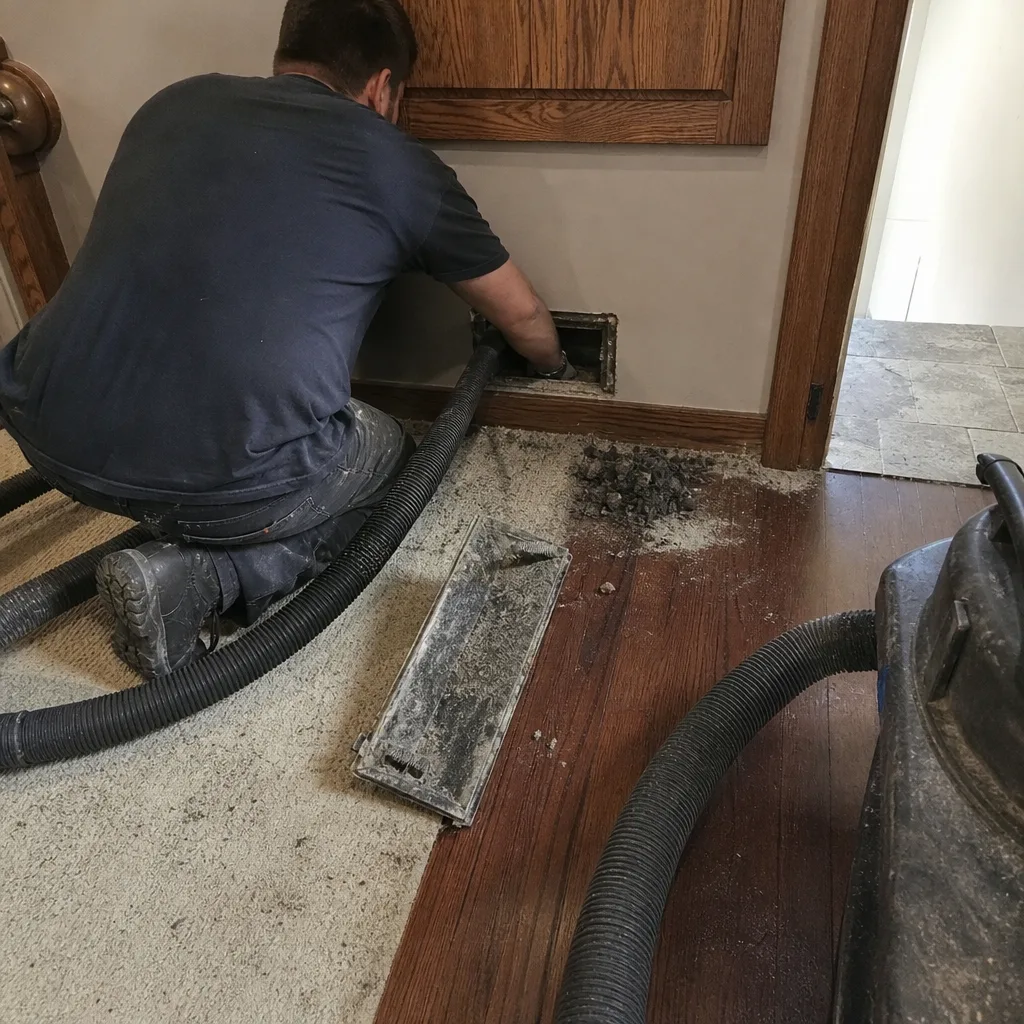 Before
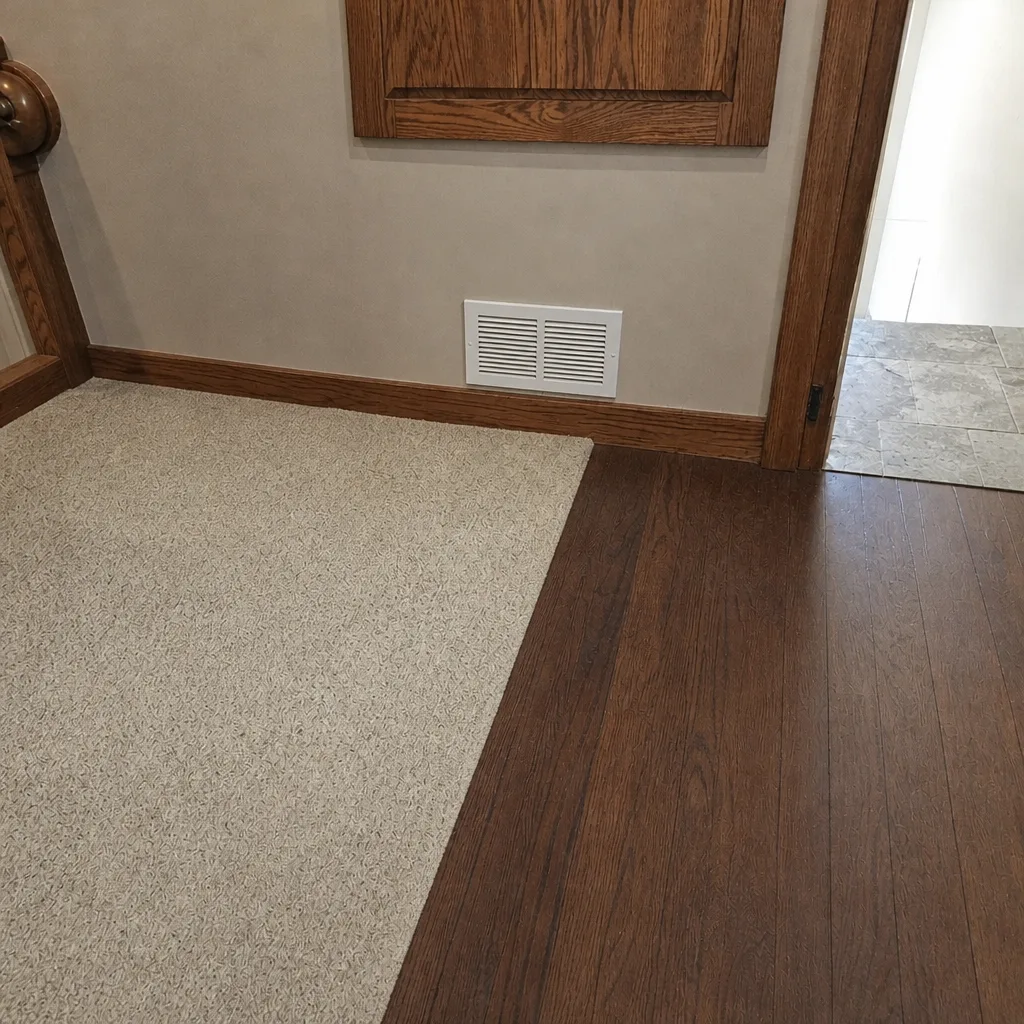 After
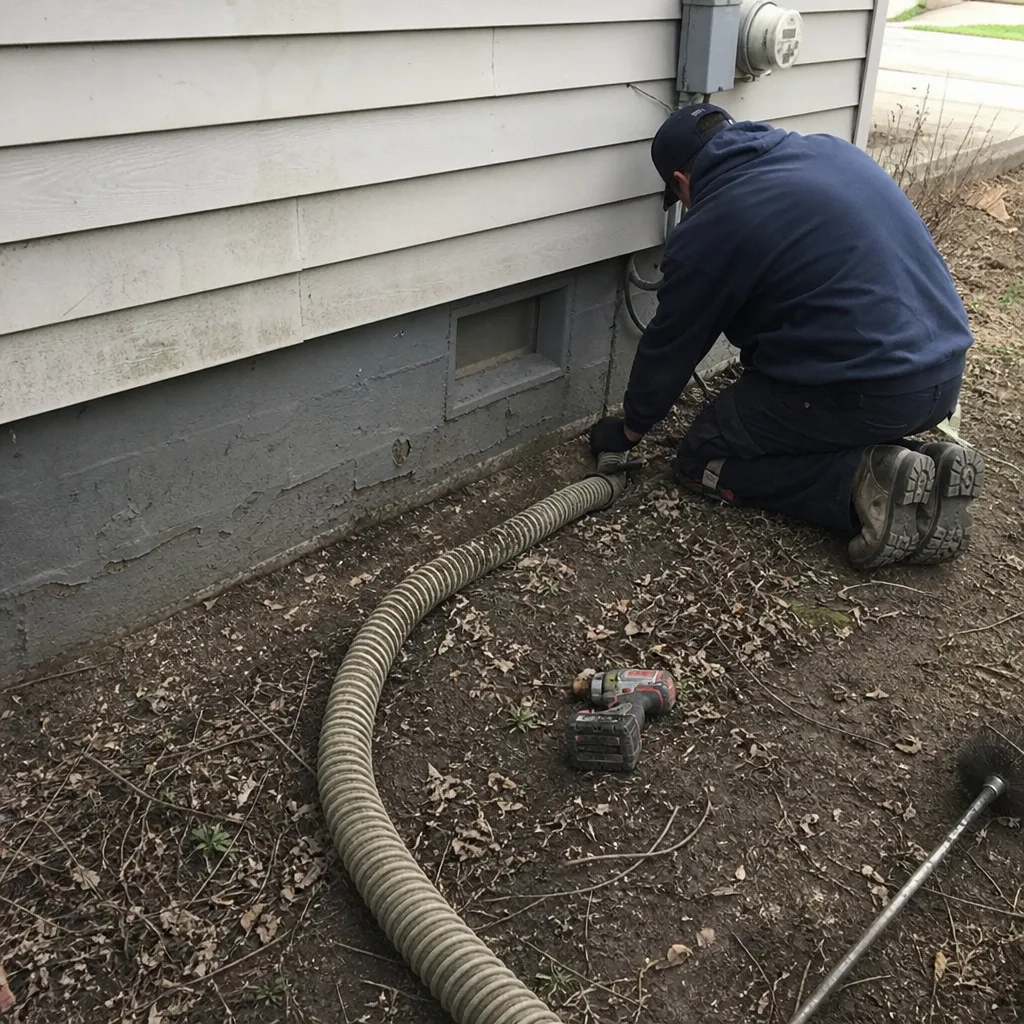 Before
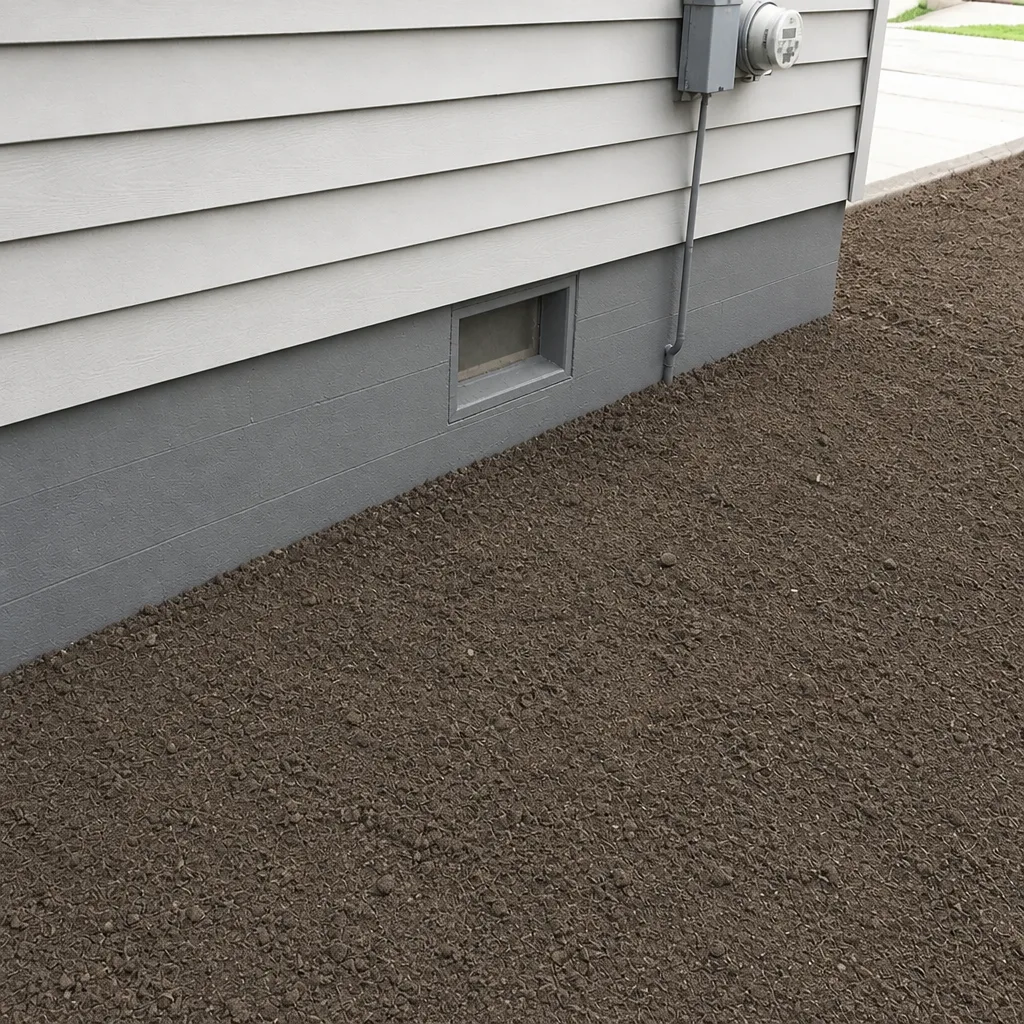 After
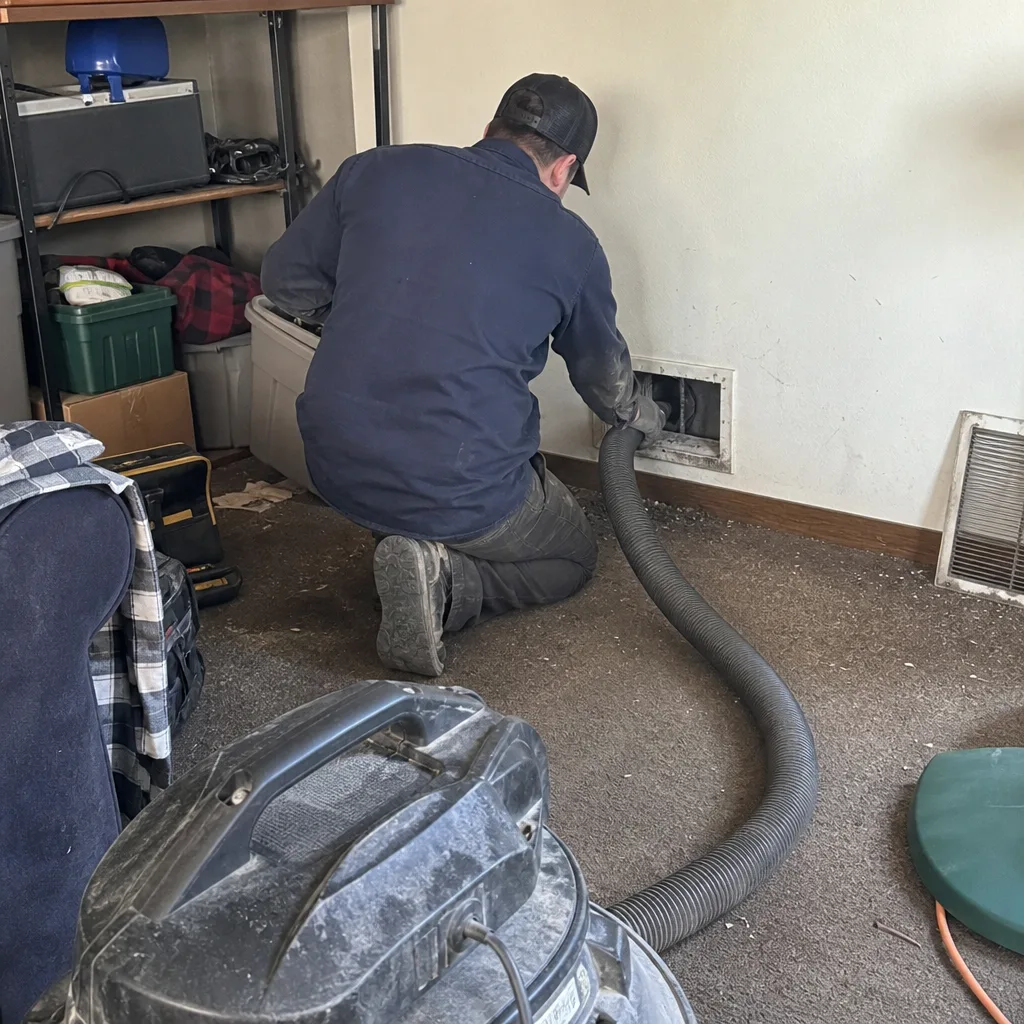 Before
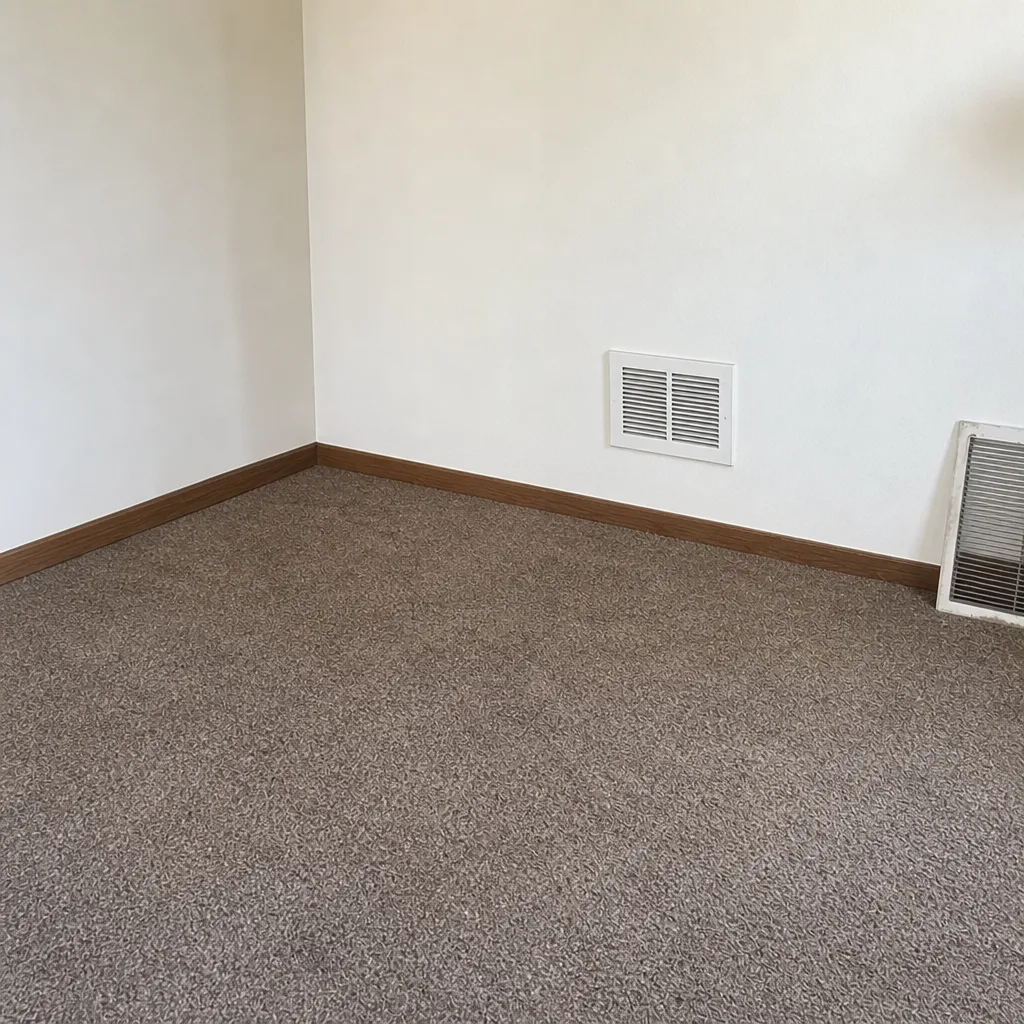 After
When to Call a Professional
Call when you notice any of the following: visible dust streaking from registers, a musty smell at system startup, a filter that loads up in weeks instead of months, a recent renovation or basement finish, a new pet in the house, or water near ductwork. Call after HVAC equipment work, before the system runs regularly. Call if the dryer takes two cycles to dry a load. Call if you’ve moved into a previously occupied home and don’t know the duct history.
You don’t need to diagnose the system yourself. Free estimates are available in Fort Wayne, and a proper assessment includes a look at duct condition, filter setup, and whether repair is needed alongside cleaning. Duct Cleaning Fort Wayne offers free estimates in Fort Wayne. Call (844) 951-3807. We answer 24/7. Fast dispatch from 7am to 7pm, Sunday through Friday.
Frequently Asked Questions
Every 3 to 5 years is the standard baseline, but Fort Wayne’s humidity swings and long heating season push many homes toward the 3-year end, and trigger events like a basement finish or a new pet can shorten it to 1 to 2 years. Let the events, not just the calendar, set your schedule. Call (844) 951-3807 for a free estimate.
Most Fort Wayne homes fall in the $300 to $700 range for a whole-system cleaning, with the final number set by a written estimate before any work starts. Pricing is per system, never per vent, and a serious quote includes what the technician will actually do. Call (844) 951-3807 for an exact quote. Estimates are free.
Low quotes are usually per-vent pricing that balloons once the technician is on site, or a price for a surface vacuum that doesn’t reach the full system. What separates a real quote is one flat price per system agreed in writing, professional-grade equipment, and before-and-after photos of your own ducts. Call (844) 951-3807 and ask for the flat-price version.
Ask for before-and-after photos of the ducts themselves, taken during the visit. A technician using Rotobrush or Nikro equipment can document what comes out of a return or supply run. The photos plus a flat, agreed-in-writing price are the two things that separate real work from a walkthrough. Call (844) 951-3807 to book a free estimate.
Yes, and they should be when the ducts leak. Cleaning a leaky system removes the debris but doesn’t stop new contamination from entering through the same gaps. Scheduling sealing and repair during the same visit means the cleaning results hold and you avoid a second appointment. Call (844) 951-3807 to have both assessed together.
Yes. Finishing a basement adds new conditioned space and new ductwork, and the construction process introduces debris that migrates into return ducts. Cleaning after the project wraps, rather than before, is the right sequence. It’s one of the most common trigger events we see in Fort Wayne. Call (844) 951-3807 for a post-renovation free estimate.
The Bottom Line
A duct cleaning schedule that works is event-triggered, not just calendar-based. Use the 3-to-5-year interval as a floor, then shorten it whenever a renovation, a new pet, a basement finish, an HVAC replacement, or water near ductwork shows up. Check filters monthly, log register dust patterns, watch static pressure if your thermostat reports it, and treat basement moisture as a prompt call rather than a wait. Pair cleaning with repair when the ducts leak, put the dryer vent on its own annual calendar, and insist on one flat price per system with before-and-after photos. That combination is the schedule that actually protects indoor air. Call (844) 951-3807. We answer 24/7. Fast dispatch from 7am to 7pm, Sunday through Friday. Our technicians have up to 14 years of experience, and estimates are free.
Written by the team at Duct Cleaning Fort Wayne.