
Last updated November 15, 2026
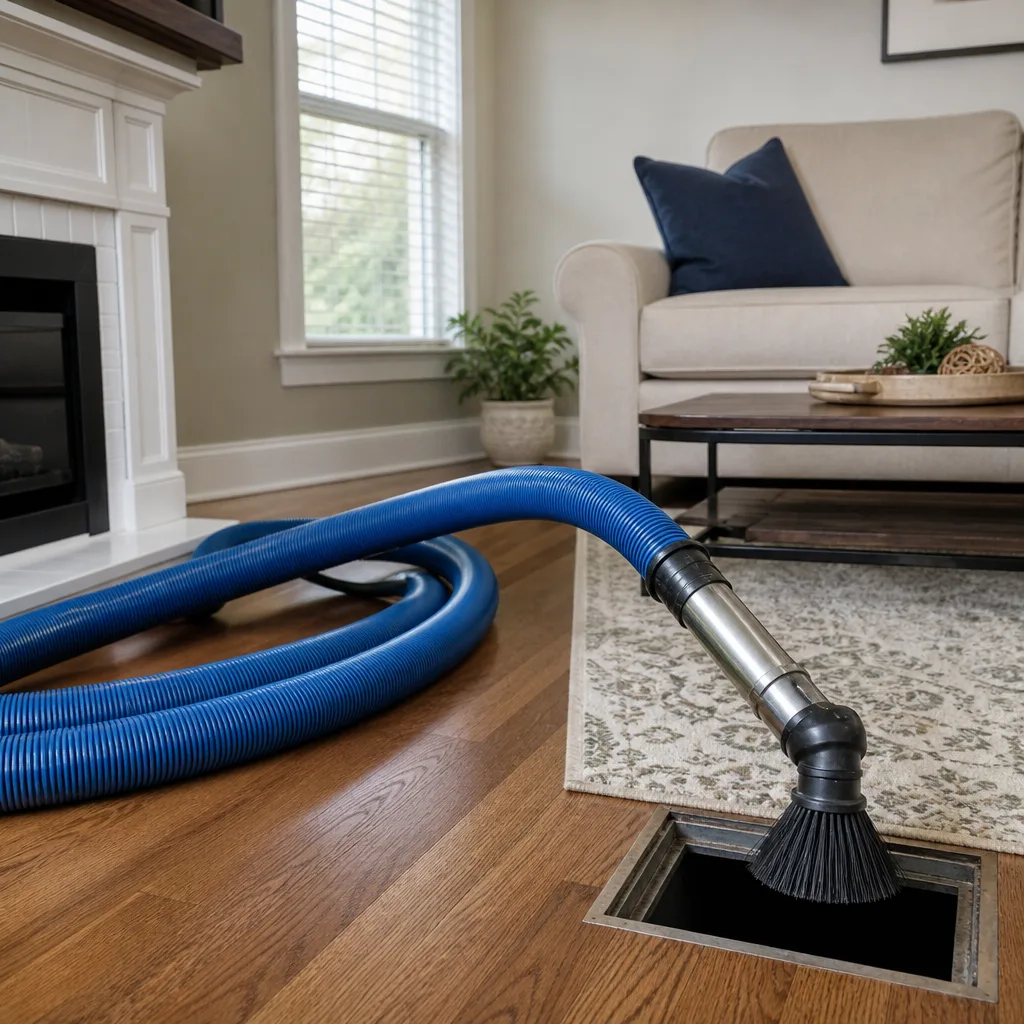 Whole-home duct cleaning
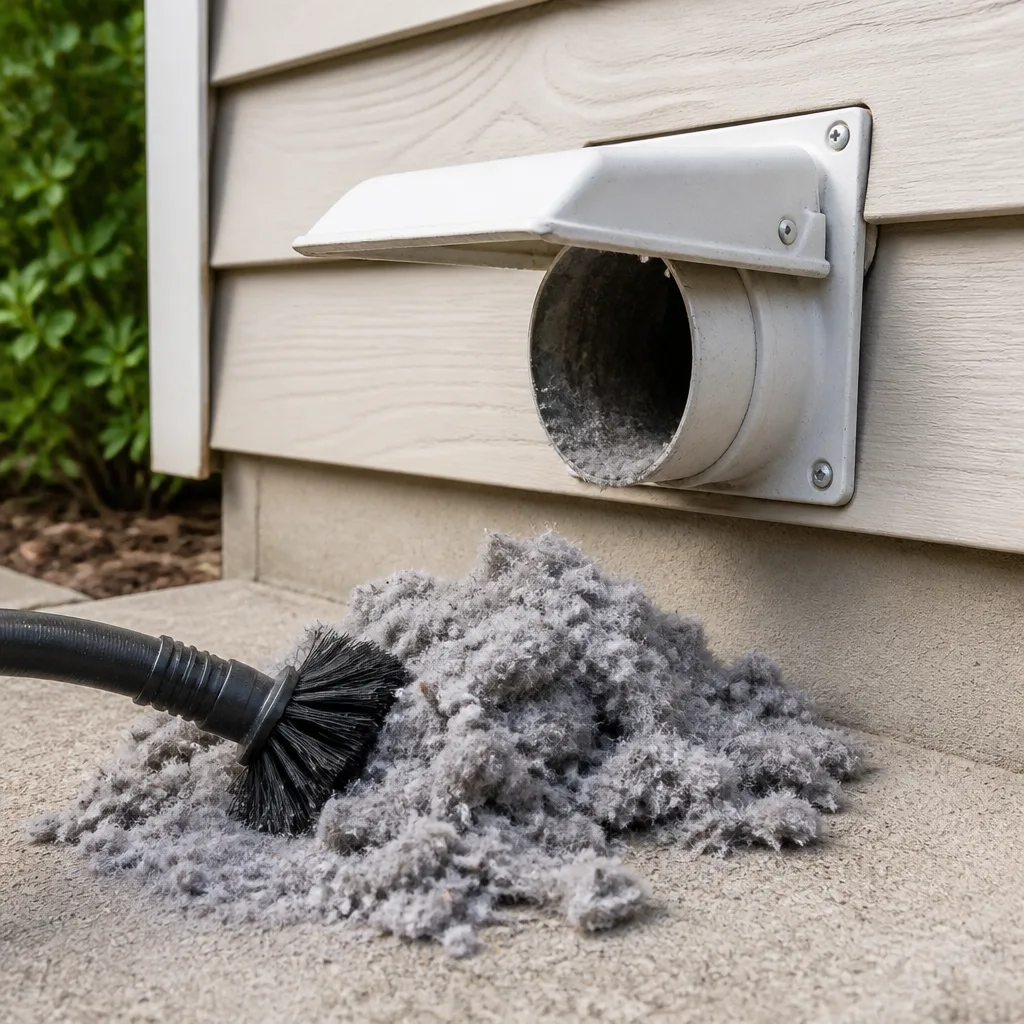 Dryer vent cleaning
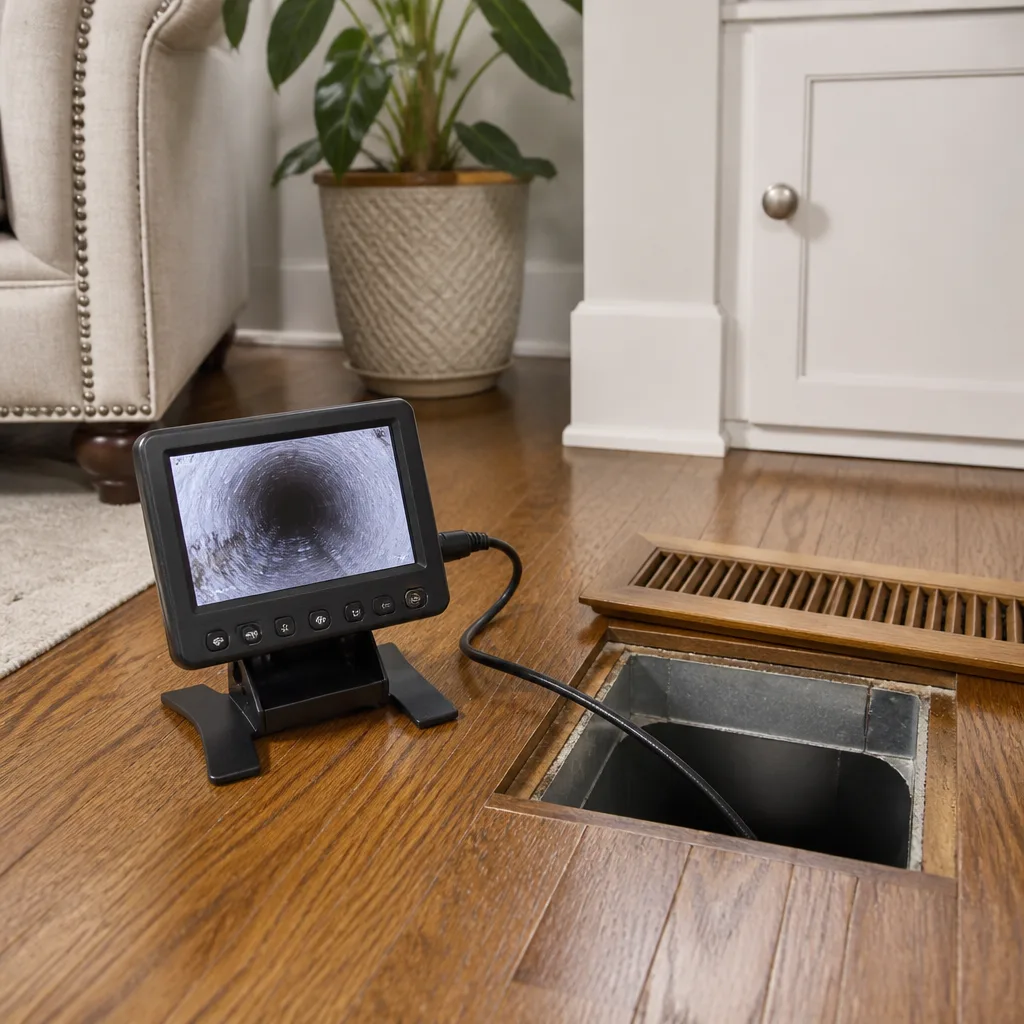 Camera inspection
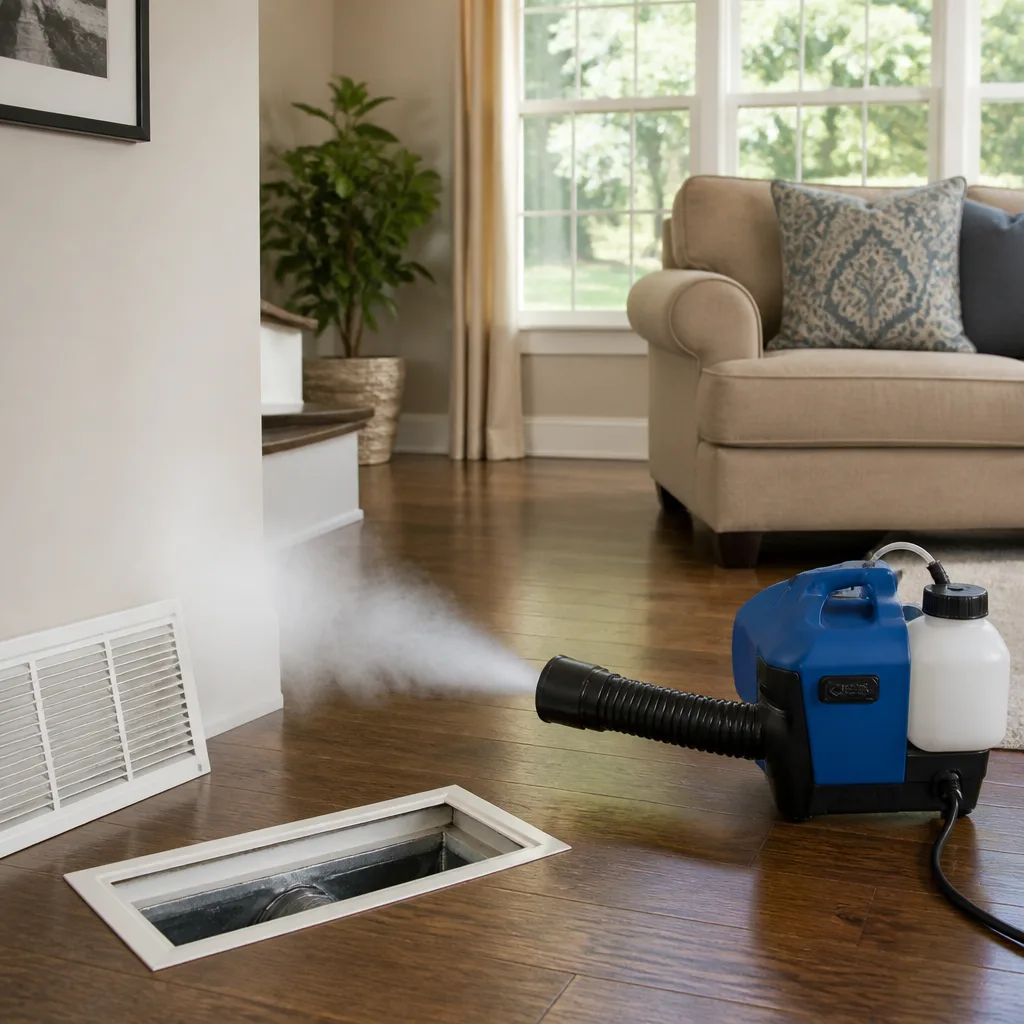 Sanitizing & deodorizing
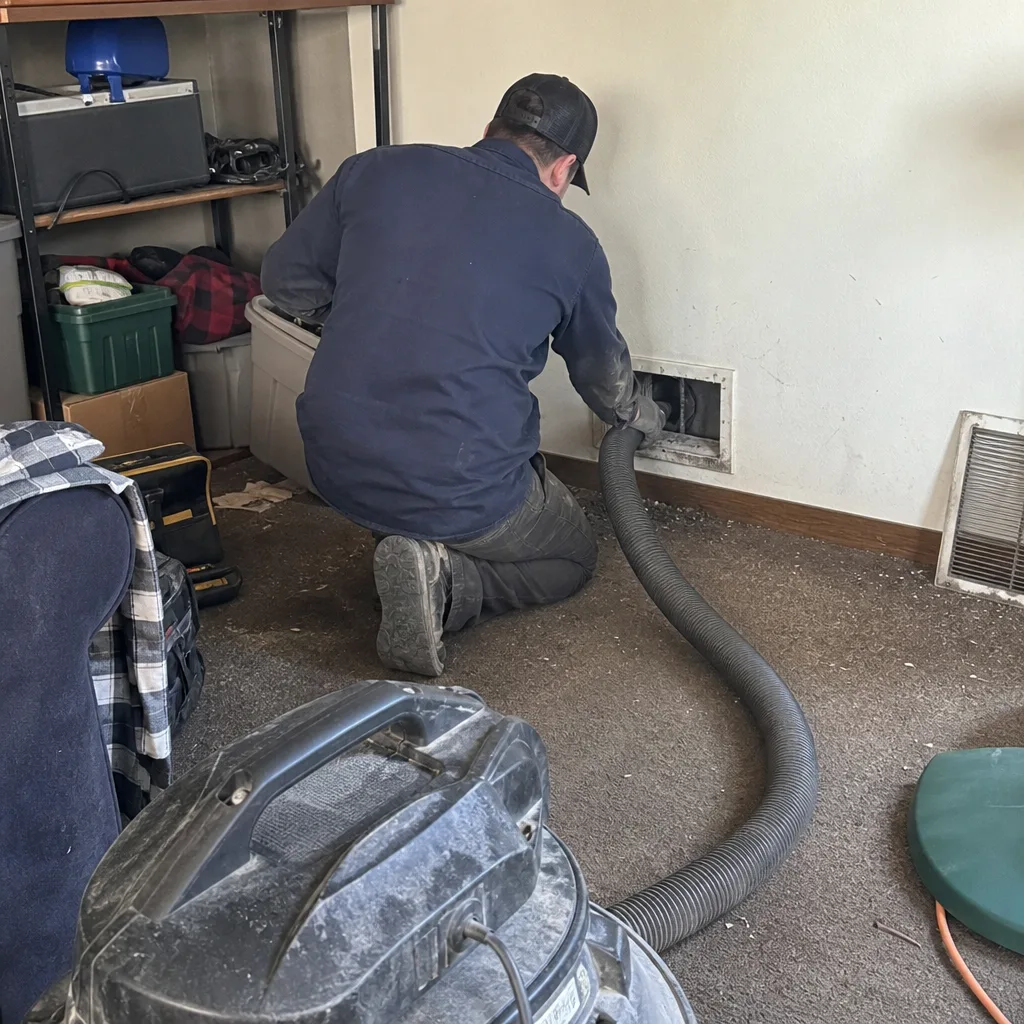
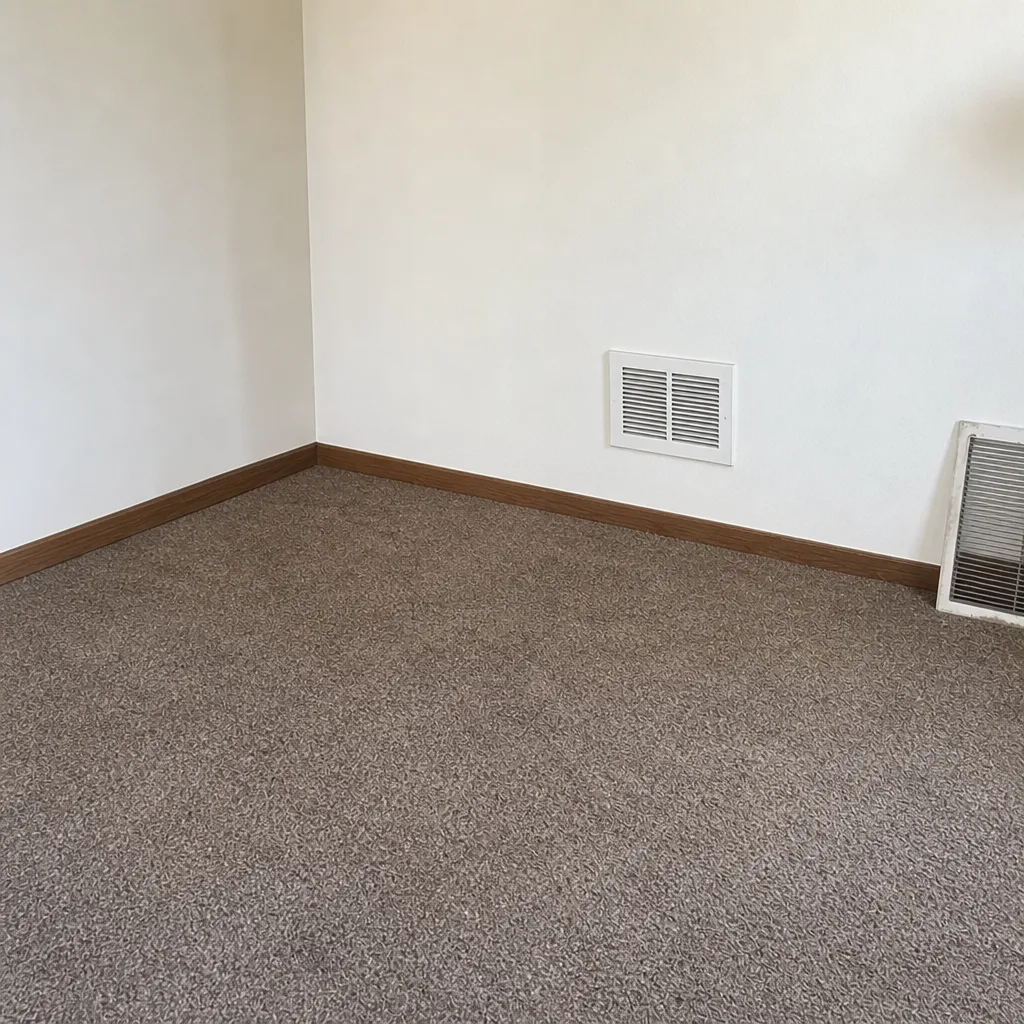
Whole-system duct and dryer vent check with before-and-after photos - you see exactly what came out of your vents
That "$99 whole-house special" is a bait ad - the real number appears once they are in your hallway, or the "clean" is a shop-vac at the register. We photograph the inside of your ducts before and after instead.
Air Duct Cleaning Warning Signs: A Fort Wayne Homeowner’s Reference Guide
Most Fort Wayne homeowners call about their ducts because of what they can see: a gray film on the ceiling around a register, dust settling on furniture hours after they wiped it down. That’s the visual sign, and it’s usually the last one to arrive. The signals that show up first are quieter and easier to explain away. A room upstairs that never warms up the way it used to. A gas or electric bill that creeps up for no obvious reason. A child who wakes up congested every morning and clears up by lunch. It’s tempting to blame the furnace, the utility company, or the change of seasons. In our experience, those are often the same system telling you something at once. This guide walks through the warning signs that actually point to a duct problem, why they get missed, and what each one usually means. Keep reading and you’ll know which signals are worth acting on.
Quick Answer
The main air duct cleaning warning signs in Fort Wayne homes are dust that returns within a day or two of cleaning, weak or uneven airflow between rooms, a utility bill that climbs faster than the weather explains, musty or stale odors at the registers, visible debris or microbial growth, and a home that feels worse after renovations. Any of these means it’s worth a professional inspection. Several of them together almost always point to a real system issue, not just surface dust.
Styles & brands we work with
- Whole-home duct cleaning
- Dryer vent cleaning
- Camera inspection
- Sanitizing & deodorizing
Table of Contents
- Cosmetic Dust vs. Systemic Dust: Why Timing Matters
- Weak Airflow and Uneven Rooms: Reading the Pattern
- Utility Bill Patterns That Point to Duct Problems
- Odors and Health Signals: Microbial Growth or Particulate Buildup?
- The Warning Sign Homeowners Miss After Remodeling
- What You Can Check Yourself at the Registers
- How to Tell if It’s Urgent
- When Warning Signs Point to a Full-System Fix
Cosmetic Dust vs. Systemic Dust: Why Timing Matters
If you wipe off a register and a light gray film returns a few days later, that’s cosmetic. If you clean the register, the ceiling around it, and the nearby furniture, and the dust is back in a day or two, that pattern points to something coming out of the system itself. The difference matters. One is a surface problem you can manage. The other means dust is being pushed through your ducts every time the air handler runs.
Here’s the test you can do without any tools: wipe a register clean with a damp cloth, note the day, and check it again in 24 to 48 hours. If the surface is visibly dusty by the second day, the dust isn’t settling from the air in the room. It’s being delivered. That usually means accumulated debris in the ducts, a leak pulling untreated air from a crawlspace or attic, or both.
In Fort Wayne, the timing test gets confusing in spring and fall, when windows are open and outdoor pollen mixes with indoor dust. That’s why the 24-to-48-hour window matters. It’s short enough to exclude most of the seasonal noise.
What “systemic” dust usually means
- Debris in the trunk and branch lines: settled dust and dander that lifts every time the blower cycles on.
- Duct leakage at joints: gaps in the run pull dirty air from unconditioned spaces directly into the supply stream. This is common in older Fort Wayne housing stock, where original galvanized duct runs have shifted with the foundation over decades. We perform structural air duct repair specifically to address this, because cleaning without sealing just repeats the problem.
- Weak filtration at the return: a filter that isn’t sealing at the edges lets dust bypass it. If the filter slot is loose, a lot of what you’re seeing came through the gap, not past the filter media.
The dust-return time is a useful diagnostic. Note it, and use it as one of your signals when you decide whether to call.
Weak Airflow and Uneven Rooms: Reading the Pattern
Airflow problems are more diagnostic than dust. Where the weakness shows up tells you something about what’s going on. A room that’s consistently warm in summer and cold in winter, while the rest of the house is fine, is a duct problem until proven otherwise. The furnace is doing its job. The air isn’t reaching the room.
Fort Wayne’s climate puts a lot of stretch on the system: hot, humid summers and cold, dry winters mean the air handler cycles heavily for many months. That cycling accelerates what a slow buildup would otherwise take much longer to do. Register velocity weakens as debris accumulates in the branch runs, and the rooms furthest from the air handler are the ones that suffer first.
Common airflow patterns and what they usually mean
- One or two distant rooms are weak, the rest are fine: restricted branch duct, debris buildup, or a crushed flex run inside a wall cavity.
- Every room is weak: a main trunk problem, a heavily loaded air handler evaporator coil, or a blower issue that isn’t duct-related. Worth ruling out the mechanical side first.
- Strong flow at some registers, dead at others: a disconnected duct run or an open joint in an unconditioned space. This is a repair issue, not a cleaning issue.
- Airflow weakens over the course of the season: progressive buildup. If it improves after a filter change but regresses within weeks, the system has continuous contamination.
If your airflow pattern fits one of these, the diagnostic step is a proper inspection, not a guess. We’ve seen many Fort Wayne jobs where a cleaning alone would have been the wrong call because a disconnected run was the real issue. Repairing the duct first, then cleaning, gets the flow back. Cleaning alone just redistributes the problem.
Utility Bill Patterns That Point to Duct Problems
Utility bills are the quietest warning sign because they arrive on their own schedule and don’t look like a duct problem. They are one. An HVAC system with leaking or heavily loaded ducts has to run longer to deliver the same comfort. That’s not a guess; it’s the basic physics of moving air through a leaky or obstructed pipe.
Here’s how to read the pattern without over-reading any single month. Look at the same month across two or three years. Compare the bill for a comparable weather month side by side. A bill that’s climbing 10% or 15% year over year, in a season with similar temperatures, is worth investigating. A 25% or higher climb on a comparable month is a signal that shouldn’t be ignored. The important word is comparable: you can’t compare a cool June to a hot one.
What to rule out before you blame the ducts
- Compare the actual weather data, not just your memory. Utility companies publish degree-day data that lets you see if a month was hotter or colder than the same month last year.
- Check for a rate change on the bill itself. A rate increase explains a higher bill without a duct problem.
- Rule out a filter that’s been in too long. A clogged filter inflates energy use the same way a duct restriction does.
- Look for a single room or zone that’s driving the discomfort. A whole-house bill increase usually correlates with whole-house airflow complaints; a single-room issue correlates with a single-run problem.
- Check whether the system short-cycles (runs briefly, shuts off, comes back on). Frequent cycling for no obvious weather reason is worth looking at.
If the bill pattern is climbing and the comfort complaint is uneven, cleaning and sealing the duct system together is the usual way to bring energy use back into a normal range. Cleaning opens the airway. Sealing closes the leaks. You need both.
Odors and Health Signals: Microbial Growth or Particulate Buildup?
Odors map to specific system conditions. A musty, earthy, or “wet basement” smell at the registers points toward microbial growth somewhere in the duct system, most often at the evaporator coil, the insulation liner inside the plenum, or a section of duct in a humid space. A sharp, stale, or smoky smell points more toward particulate accumulation: settled debris, pet dander, and dust in the trunk that lifts when the system runs. The two problems need different responses.
Health signals follow the same split. If household members wake up congested, itchy, or with sinus pressure, and the symptoms ease as the day goes on and get worse again in the evening, the source is likely something they’re breathing at home. If the pattern is worse in the same room every time, suspect that run. If the whole house is affected, suspect the trunk and the return. Those patterns are not a diagnosis, but they are a useful clue to bring to a professional inspection.
We don’t claim to treat any medical condition, and nobody should. What we can say is that indoor air quality work targets the source: cleaning and treating the ducts, verifying the coil is clean, and sealing openings that let unconditioned air into the system. For households in Fort Wayne with allergy sufferers, young children, older adults, or pets, that usually means a more thorough process than a standard single-pass dust removal.
The odor test you can do yourself
- Turn the system fan on at the thermostat and leave it running.
- Go to the return grille (usually a large grate on a wall or in the hallway ceiling) and take a slow breath near it, without putting your face against the grille.
- Move to two or three supply registers and repeat.
- Note whether the smell is sour, musty, or dry and dusty. Sour and musty read as moisture-related. Dry and dusty reads as accumulated particulate.
- Repeat the same test before the system runs for the day. If the smell is strongest at first startup, that’s a strong sign of settled contamination being lifted.
Bring those notes to the estimate. They tell a technician what to look at first.
The Warning Sign Homeowners Miss After Remodeling
Renovation is the category most homeowners skip over, and it produces the most concentrated duct contamination of any single event. Drywall dust is fine, aggressive, and travels. It coats the inside of ductwork, and it settles into the evaporator coil where it mixes with condensation and becomes a moist, dusty film. Construction crews rarely tape off the supply and return registers before demolition, and even when they do, the run of dust continues for weeks after the walls close.
If you’ve had any of the following done in the past year or two, treat it as a duct warning sign regardless of what the registers look like:
- Drywall installation, patching, or texture work.
- Floor refinishing.
- Kitchen or bathroom remodeling with open walls.
- A roof replacement or attic work above an unconditioned duct run.
- Insulation replacement in the attic, especially blown-in insulation, which can migrate into duct joints.
In older Fort Wayne neighborhoods, where additions, converted porches, and re-routed duct runs are very common, the risk doubles: an old branch line and new construction dust meet in a space the homeowner never sees. A cleaning after renovation removes what got in. A follow-up repair closes the joints that let more in the next time.
What You Can Check Yourself at the Registers
You can do a lot of the diagnostic work at home without opening anything up. The goal isn’t to become a duct technician. It’s to gather enough evidence to know whether to call.
A simple visual inspection you can do in ten minutes
- Take the register cover off on the worst-performing room in the house. You don’t need tools for most of them.
- Shine a flashlight into the duct. You’re looking for accumulated dust on the interior walls, visible debris, water staining or rust, and any separation between duct sections.
- Check the return grille. A heavily caked return grille means the filtration side isn’t doing its job.
- Look at the ceiling around the register. Dark streaking or a faint gray ring is a sign of air leaking past the register boot. That leak pulls attic or wall-cavity air into the supply stream.
- Note the temperature difference between the worst room and the best room by placing a thermometer in each for an hour.
- Write down what you see. Notes taken before the call make the estimate faster and give the technician a starting point.
Two things you should not do yourself: open the plenum, and climb into an attic to inspect duct runs. Both are work for trained technicians, and attic duct work involves slip, fall, and insulation exposure risks that aren’t worth taking. If the visible signs are strong, call.
How to Tell if It’s Urgent
Duct cleaning is rarely an emergency. It’s a scheduled job: it matters for air quality and energy use, not for the structural safety of the house. There are a few conditions that push a job to a higher priority.
- Visible mold growth on the interior of a duct run or at the evaporator coil. Stop and call. Do not run the system fan until you’ve had it inspected.
- A wet or standing-water smell with visible moisture in the ducts, or stains suggesting water intrusion. Moisture plus contamination becomes a health concern quickly.
- A customer with a documented respiratory condition that a doctor has connected to the home environment. That’s not a cleaning emergency, but it’s a reason not to wait.
- A smell that gets stronger when the heat turns on in the fall. First-heat-of-the-season smell is common, but a persistent sharp or burning smell means stop and call.
For most of what you’ve read here, there’s no benefit to rushing. There’s a real benefit to getting the diagnosis right. A cleaning scheduled properly, with an inspection ahead of it and a leak check afterward, solves more than a fast appointment does.
When Warning Signs Point to a Full-System Fix
A single warning sign is worth noting. Several together usually mean the whole system needs attention, not just the visible parts. This is where the difference between a cleaning visit and a full-system process shows. A single-pass cleaning of the visible runs leaves the coil, the plenum, and the leaks untouched. The dust comes back in weeks. The bill keeps climbing. That’s why we work across three steps: clean it, fix it, protect it.
The cleaning step uses professional-grade equipment from Rotobrush and Nikro, the same systems used in commercial duct work, rather than the portable consumer units that a lot of one-price cleaning visits use. Source removal at that level of equipment actually lifts the accumulated material from the duct walls. Then the repair step addresses the leaks and separations that got the dust in. Finally, the protect step uses recognized air-quality components from Honeywell, Aprilaire, Abatement Technologies, or Guardsman to improve filtration, humidity control, or post-clean treatment of contamination. You get all three from a single provider, which removes the coordination cost of hiring three separate vendors. You can read more about the base service on our air duct cleaning page.
We also want to be clear on a service most duct cleaners don’t offer. dryer vent cleaning is a dedicated, standalone service for us, because lint buildup in a dryer vent is a documented fire risk. If you’re having your ducts looked at, it’s a good moment to have the dryer vent checked as well, since the same blockage logic and the same equipment apply.
Common Mistakes to Avoid
- Choosing on the cheapest advertised price. A very low listed price usually reflects a portable single-pass cleaning of the visible runs. You’ll get what you paid for. Ask what equipment is used, whether the coil is included, and whether the estimate is a flat price per system or a per-vent charge.
- Skipping the repair step. Cleaning without sealing leaks puts you back where you started within a season. If there’s an open joint or a disconnected run, that’s the real issue.
- Assuming the seasonal bill change is normal. The right comparison is the same month across multiple years, not last month versus this one. Fort Wayne winters are hard on HVAC systems; a bill that climbs more than weather explains is a signal.
- Ignoring the renovation timeline. If you remodeled in the past year, treat the ducts as contaminated, no matter what the registers look like.
- Believing that clean registers mean a clean system. The most heavily loaded section of a duct system is usually the run you can’t see.
- Leaving the dryer vent out of the conversation. Lint buildup in a dryer vent is one of the leading causes of house fires. If you’re booking a duct service anyway, adding the dryer vent is straightforward.
- Assuming that a new furnace means a clean duct system. A new air handler in old ductwork just pushes the same debris more efficiently.
See the difference
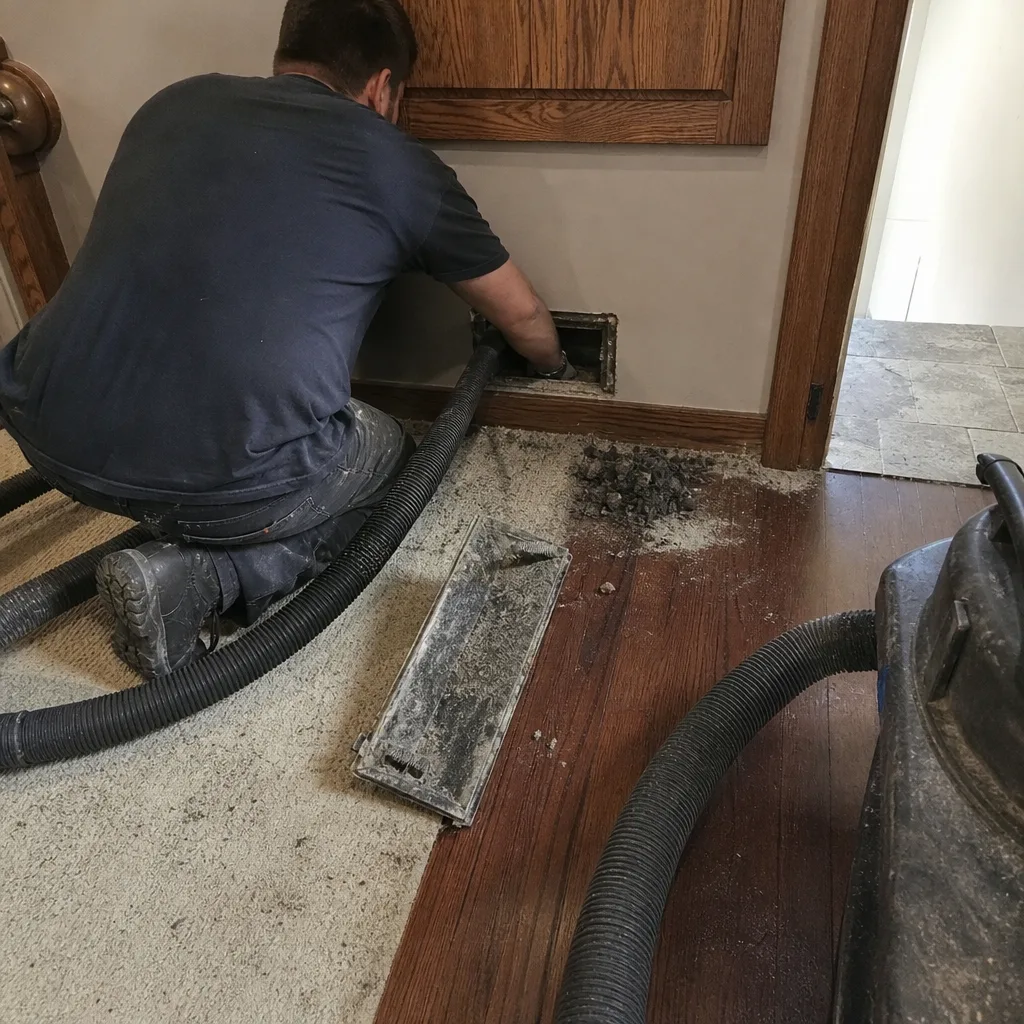 Before
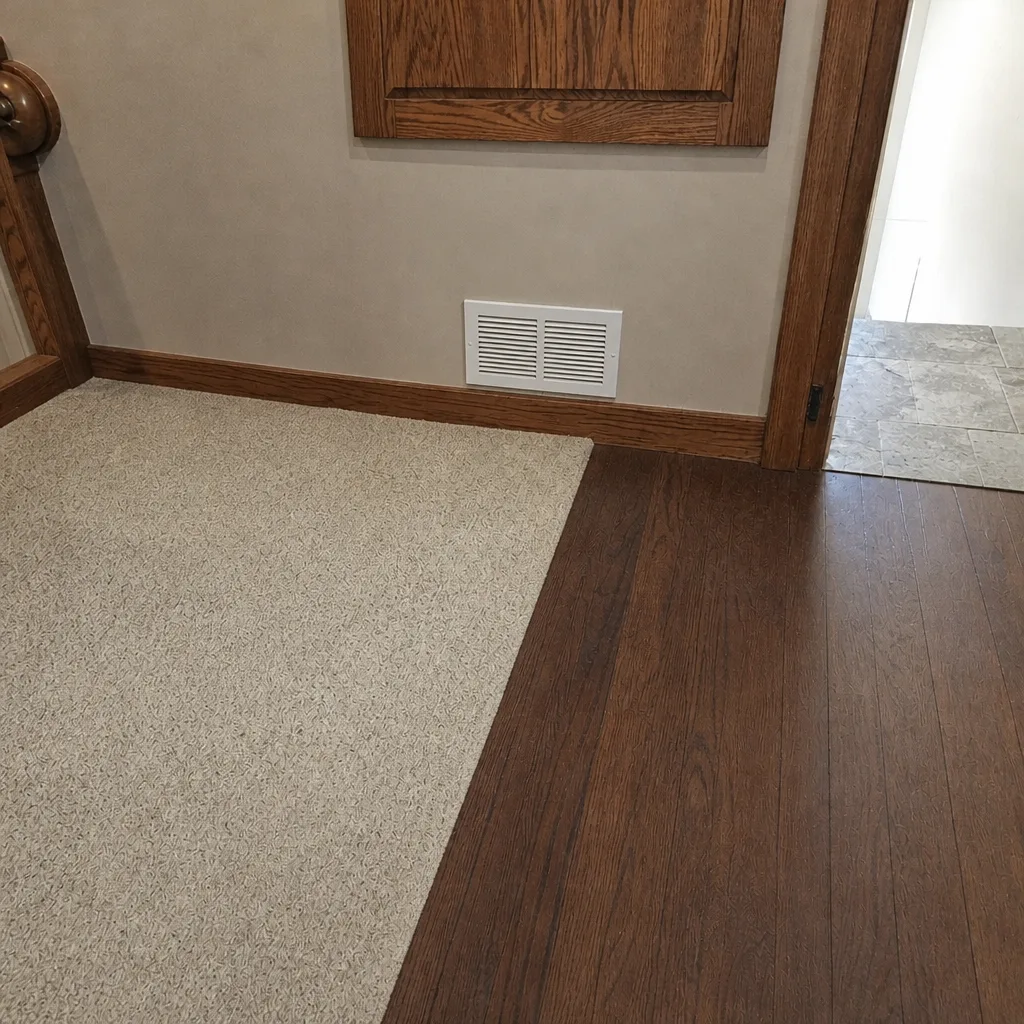 After
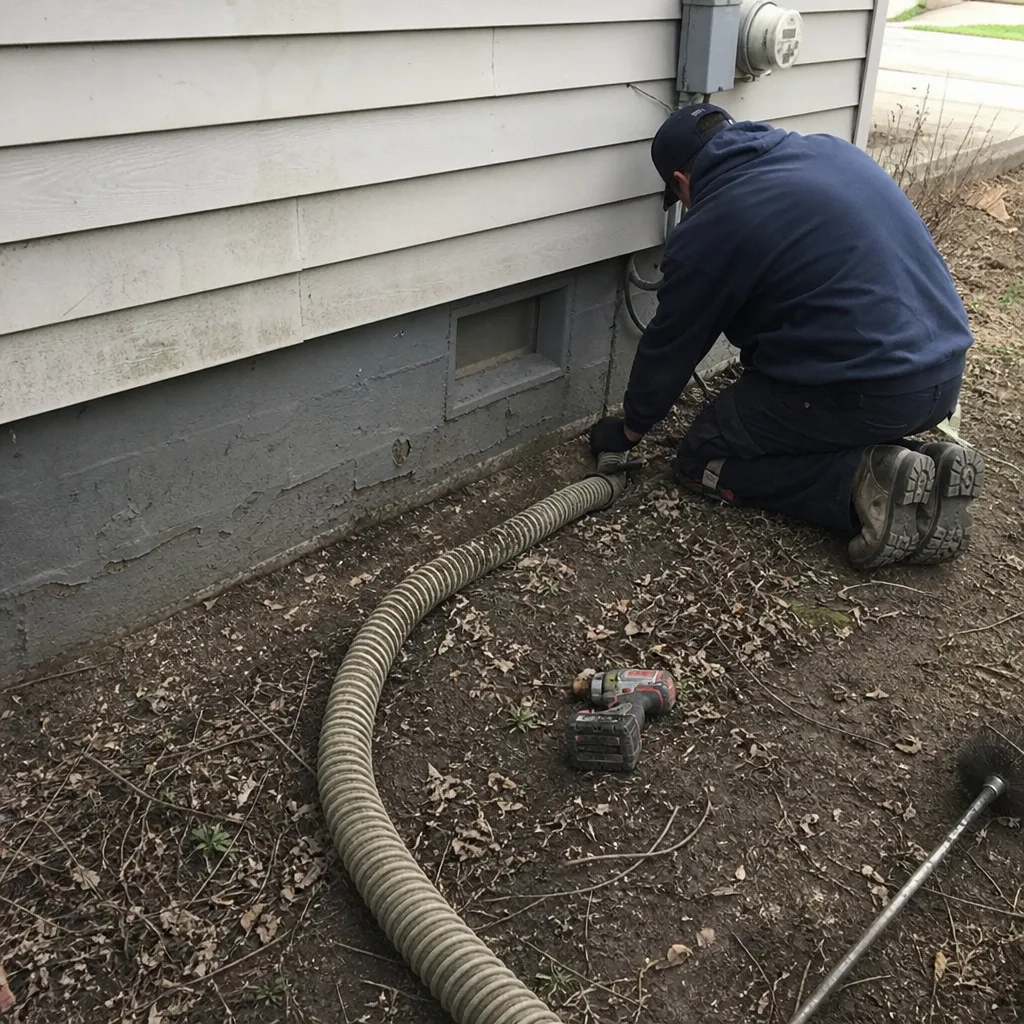 Before
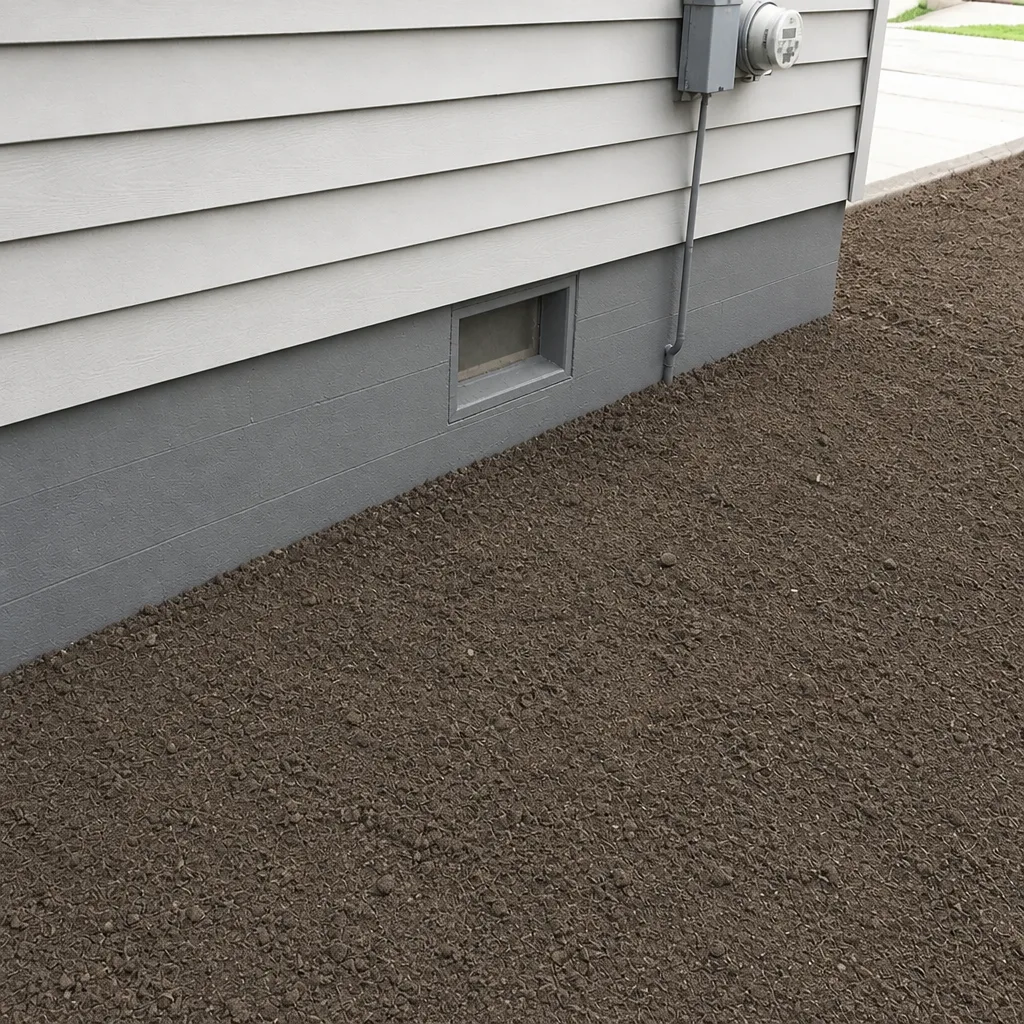 After
 Before
 After
When to Call a Professional
Call a professional when you have any of the following: dust returning within 48 hours of a register cleaning, uneven airflow between rooms that’s worsened over a season, a utility bill climbing more than weather explains on a comparable month, a persistent musty or sour smell at the registers, or a renovation in the past year or two. Call immediately if you see visible mold in a duct run or a wet-insulation smell. Duct Cleaning Fort Wayne offers free estimates in Fort Wayne, and our technicians have up to 14 years of experience on full-system duct work. We hold to one flat price per system, agreed before the work starts, so there’s no per-vent surprise on the invoice. Call (844) 951-3807. We answer 24/7. Fast dispatch from 7am to 7pm, Sunday through Friday.
Frequently Asked Questions
Most whole-system duct cleanings in Fort Wayne land in the range of a few hundred dollars for a standard single-story home, and scale with square footage, number of systems, and how much repair is needed. Pricing is per job, set by a written estimate given before work begins. We don’t quote per vent, and we don’t put a coupon number in an ad that turns into a bigger invoice on site. Call (844) 951-3807 for a free estimate. We answer 24/7. Fast dispatch from 7am to 7pm, Sunday through Friday.
Mostly because they’re doing much less work. A low quote usually reflects a portable single-pass cleaning of the visible supply runs, no coil work, no return-side attention, and no repair. Professional equipment like the Rotobrush and Nikro systems we use is a different class of cleaning, and it costs more to run. Ask any provider what they’ll actually do and what happens if they find a leak. The answer tells you whether the cheap quote is a real price or a starting point.
Ask for before-and-after photos of the inside of your own ducts, taken at the start and at the end of the job. That’s standard for us. A cleaning that doesn’t come with images of your system is a cleaning you can’t verify. Add a follow-up check: if the dust at the registers is back within 48 hours, the job wasn’t complete. Call (844) 951-3807 for an exact quote. Estimates are free.
Most Fort Wayne homes don’t need cleaning on a fixed calendar. They need it when there’s a signal: renovation dust, visible buildup, a persistent smell, or an airflow change. A typical interval is every few years for a pet-owning household and longer for a clean home with good filtration. If you’ve remodeled recently, don’t wait for the interval. Get it looked at.
It can. The long heating season and humid summers mean the air handler runs heavily for most of the year, which is the pattern that accelerates debris accumulation and stresses duct joints. The freeze-thaw cycle also shifts foundation and framing, which is why duct separations in older Fort Wayne housing are not unusual. Our Fort Wayne service area sees this regularly in the older central neighborhoods.
It can reduce the particulate and microbial load that household air carries, which some allergy sufferers notice. We don’t make medical claims. What we do is source removal of the material that accumulates in the ducts, a coil and plenum check, a leak sealing step, and air-quality components from Honeywell, Aprilaire, Abatement Technologies, or Guardsman where filtration or moisture control is the underlying problem. None of that replaces a doctor’s advice.
If the ducts have a leak or a separation, cleaning alone leaves the cause in place. Dirty air from a crawlspace or attic enters the supply stream through the gap every time the system runs; the dust is back within a season, and the energy bill stays high. Seal the gap, then clean. That order is what actually resolves the issue. Same-day service is available when the schedule allows; call (844) 951-3807.
The Bottom Line
The reliable warning signs are not at the registers. They are in the airflow pattern, the bill, the odor, and the renovation history. Dust that returns within 48 hours of a cleaning is systemic, not cosmetic. Uneven rooms point to a specific duct problem, not a general “dirty ducts” diagnosis. A bill climbing more than weather explains is an airflow and leakage signal. Musty smells point to microbial growth and need a different response than dry, smoky ones. And any renovation in the last year or two is a warning sign by itself. If two or more fit your Fort Wayne home, book an estimate and get the system looked at properly. Cleaning, repairing, and protecting in one process is what stops the problem coming back. For a foundation-level overview of the base service, see our Duct Cleaning Fort Wayne page.
Call (844) 951-3807 for a free estimate. We answer 24/7. Fast dispatch from 7am to 7pm, Sunday through Friday.
Written by the team at Duct Cleaning Fort Wayne.