
Last updated November 15, 2026
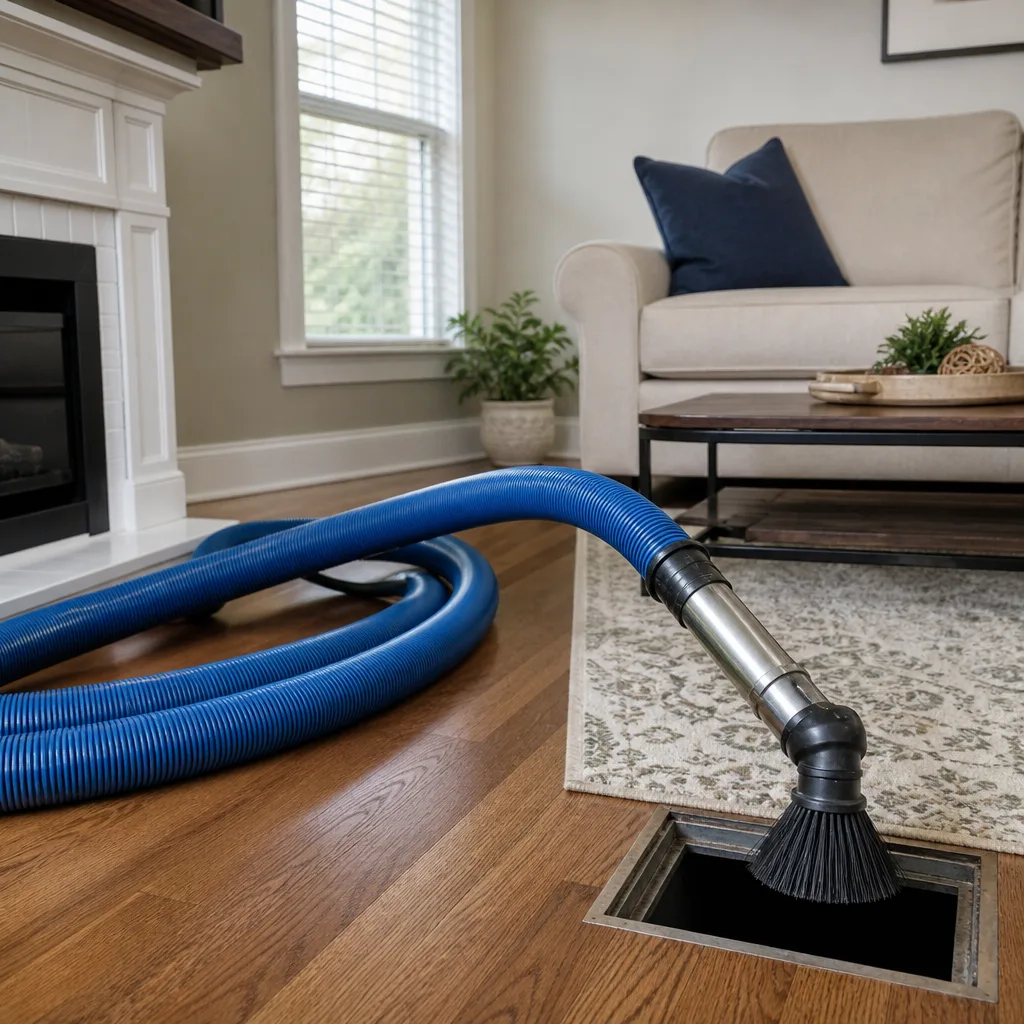 Whole-home duct cleaning
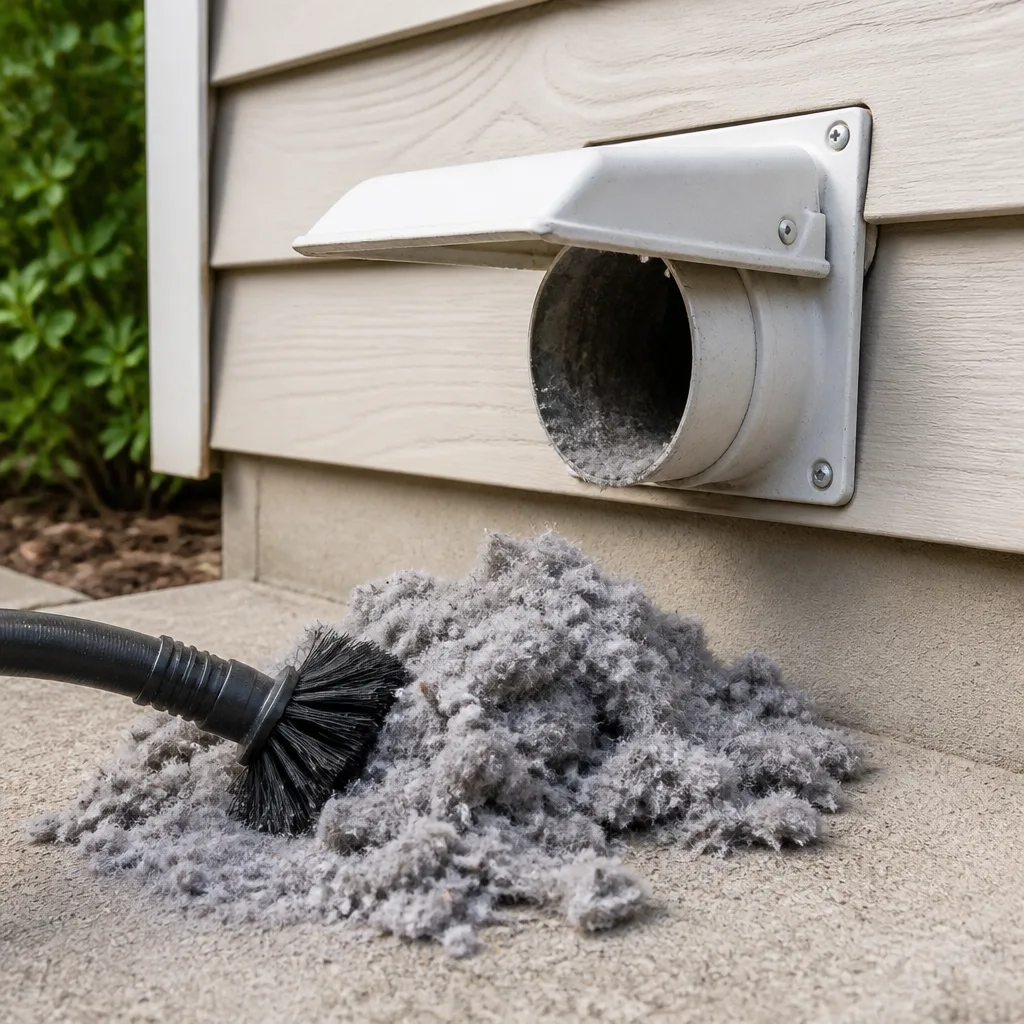 Dryer vent cleaning
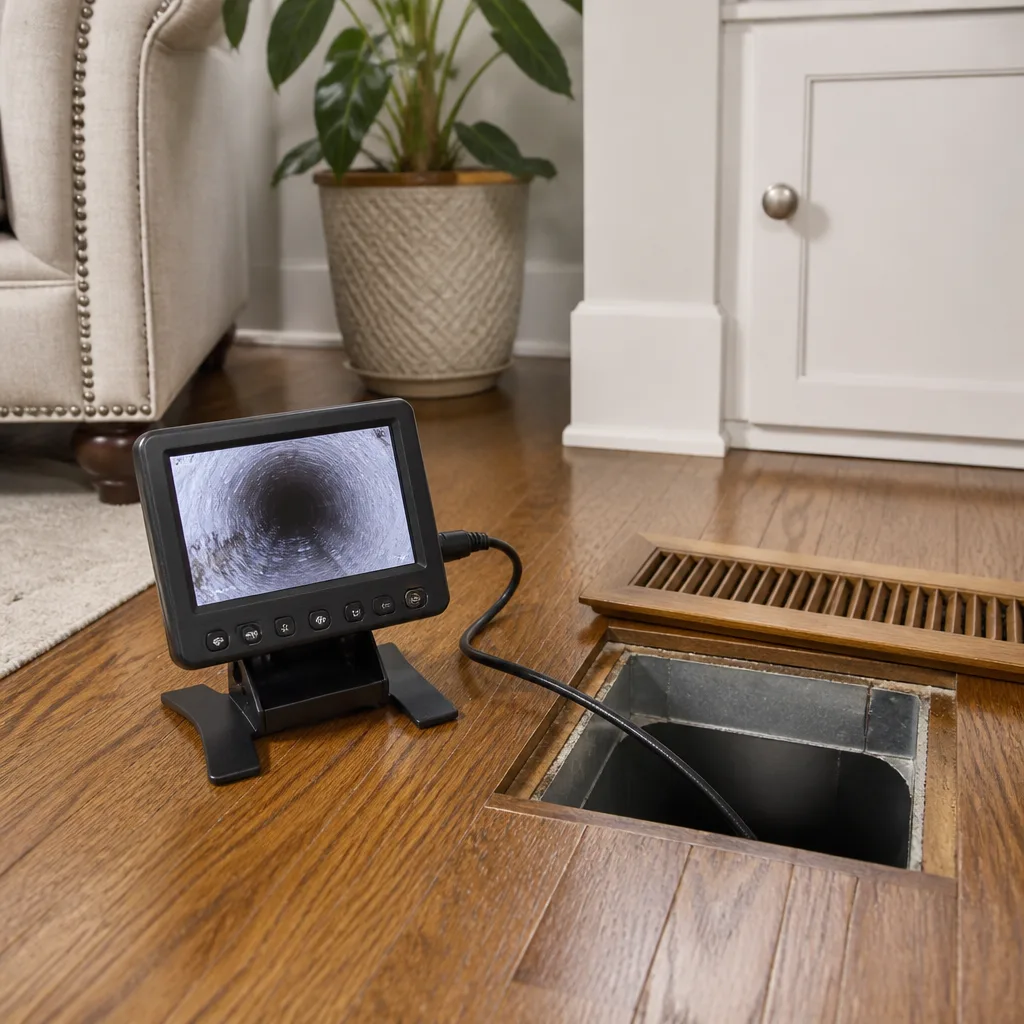 Camera inspection
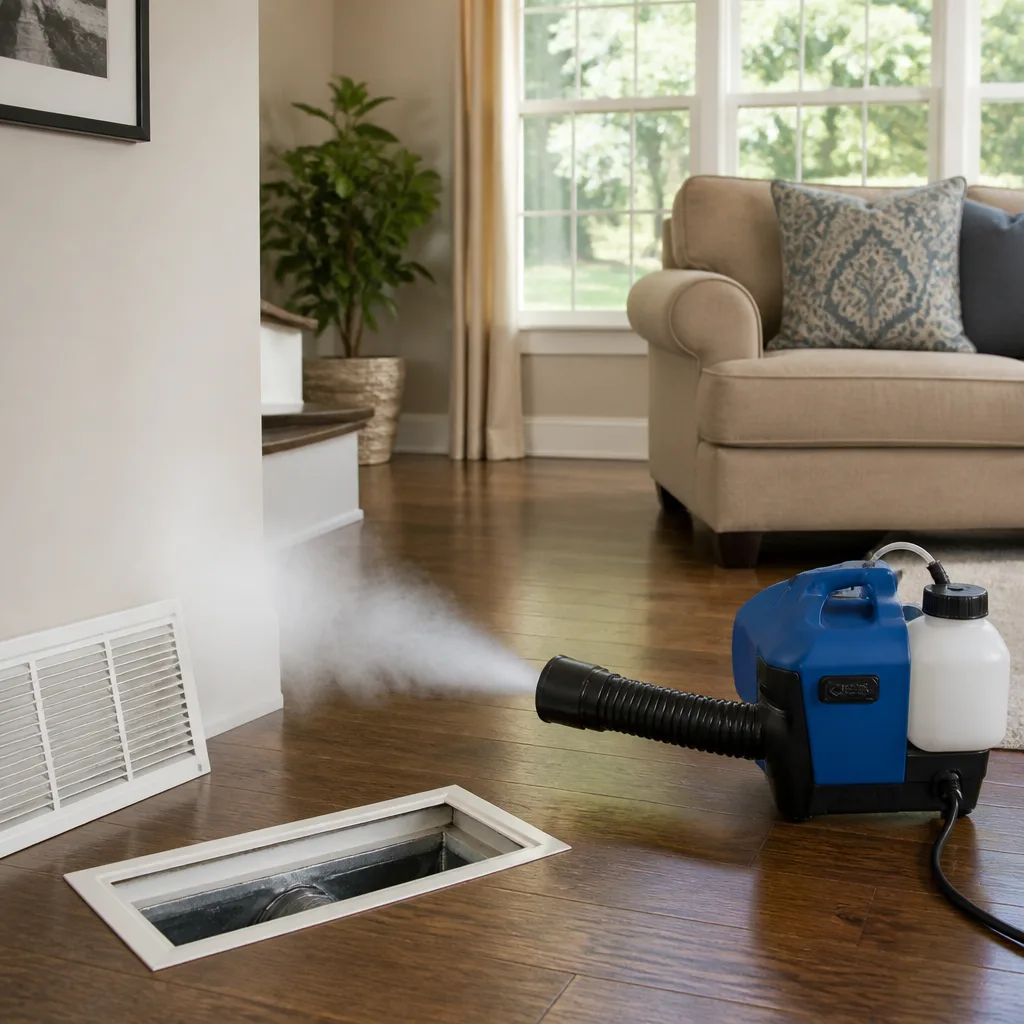 Sanitizing & deodorizing
Whole-system duct and dryer vent check with before-and-after photos - you see exactly what came out of your vents
That "$99 whole-house special" is a bait ad - the real number appears once they are in your hallway, or the "clean" is a shop-vac at the register. We photograph the inside of your ducts before and after instead.
Air Duct Cleaning Maintenance Checklist for Fort Wayne Homeowners
Most homeowners change the filter on a schedule and assume the duct system is fine. It’s a reasonable habit, but filter condition tells you almost nothing about what’s happening inside the plenum, the flex runs, or the return boxes. A filter catches what reaches it; it says nothing about leaks at a collar joint, dust packed against a trunk line, or a run that’s quietly starving one bedroom of air. What follows is a system-state tracker for Fort Wayne homes: what to look for, what to write down, and how to read the pattern across seasons so problems surface before they compound.
Quick Answer
A workable air duct maintenance routine in Fort Wayne has three parts: a monthly read on filter loading, a seasonal walkthrough of every register and return grille, and a written log of both so you can spot trends. Professional cleaning follows what the log shows, not a fixed calendar. Most homes here need a full-system cleaning every three to five years, sooner if the log shows fast filter loading or visible buildup at the returns.
Styles & brands we work with
- Whole-home duct cleaning
- Dryer vent cleaning
- Camera inspection
- Sanitizing & deodorizing
Table of Contents
- Why a Filter Schedule Alone Doesn’t Tell You Much
- The Room-by-Room Airflow Walkthrough (No Tools Needed)
- What Your Registers and Return Grilles Are Telling You
- Tracking Filter Loading Rate as a System Health Gauge
- Seasonal Checkpoints for Fort Wayne Weather
- What to Document Before and After a Professional Visit
- When the Checklist Points to Repair, Not Just Cleaning
- The Dryer Vent Belongs on the Same Checklist
Why a Filter Schedule Alone Doesn’t Tell You Much
A filter is a single point of failure that most people treat as the whole system. It sits at the air handler or in a return grille, and it only describes the air that actually reached it. Ductwork is a network of trunk lines, branches, collars, boots, and joints, and any one of those can fail independently of what the filter looks like.
Consider two Fort Wayne homes on the same filter schedule. In the first, the filter loads evenly and lasts its full interval. In the second, the same filter is gray within a few weeks. Same filter, same house size, very different duct systems. The second home is telling you something: a disconnected run pulling attic or crawlspace air, a crushed flex duct, or a return box that’s drawing from an unconditioned space. None of that shows up in a filter change reminder.
This matters more in older Fort Wayne housing stock, where duct systems have often been extended, rerouted, or patched over several rounds of renovation. A system installed in one era and modified in another tends to have joints that don’t quite line up. That’s where leaks start, and leaks are where contamination enters.
The fix isn’t to abandon the filter schedule. It’s to treat the filter as one data point and add the observations below so you’re reading the whole system. We’ve seen enough Fort Wayne duct systems to know the pattern: the homes with the fewest surprises are the ones where the homeowner kept some kind of record.
The Room-by-Room Airflow Walkthrough (No Tools Needed)
You can assess the balance of your duct system with nothing but your hand and a few minutes per room. Run the walkthrough with the system on and the house closed up, the way it runs on a normal day.
- Start at the farthest register from the air handler. This is where a duct system shows its weaknesses first. Hold your hand at the grille and note whether the flow feels strong, moderate, or weak.
- Work back toward the air handler, room by room. Note the flow at each supply register on the same scale. A system that cools well in the living room but barely moves air in a back bedroom is out of balance, not just dirty.
- Check every return grille. Return airflow should feel noticeably stronger than supply airflow. If a return feels weak, it’s either blocked, undersized, or the duct behind it has come apart.
- Listen at each register for a few seconds. A whistle or rush means restriction. A rattle means a loose boot or damper.
- Note temperature differences. Air from a register that feels noticeably warmer (in heating season) or cooler (in cooling season) than the room may be traveling through an uninsulated or leaking run.
- Write down your ratings room by room. You’re not diagnosing anything yet. You’re establishing a baseline you can compare against next season.
Repeat the walkthrough at the start of heating season and again at the start of cooling season. If a room that rated strong last winter now rates weak, something changed in the ductwork, the damper position, or the blower. That’s the moment to look closer, and it’s exactly the kind of change a cleaning company can’t see during a one-time visit.
What Your Registers and Return Grilles Are Telling You
Surface dust on a register face and internal duct buildup look similar in a photo and mean very different things. Learning to tell them apart saves you from paying for a cleaning that won’t fix the problem, and from skipping one that would.
Surface dust settles on the grille face from room air. It wipes off easily with a damp cloth and comes back slowly. It’s normal, especially in homes with pets, and it doesn’t necessarily indicate duct contamination.
Internal buildup shows up differently. Look for these indicators:
- Dark streaking around the perimeter of the grille, where air escapes past the frame. This is a sign of a poor seal, and it means air is bypassing the filter.
- Visible dust or debris on the inside of the return box when you remove the grille. If the return plenum is coated, the trunk line behind it almost certainly is too.
- Fuzzy or fibrous material clinging to the grille or visible inside the boot. That’s lint and insulation fibers, not dust.
- Discolored or damp-looking streaks on the duct surface, which can indicate condensation and a moisture problem worth checking.
- A musty smell at one register but not others, which points to a localized moisture or microbial issue rather than general dust.
Return grilles matter more than supply registers here. Everything the system pulls in passes through the returns, so a dirty return box is the clearest early signal. In Fort Wayne homes with finished basements, the return is often in a ceiling or a low wall, and it’s the grille most likely to be missed during routine house cleaning.
Tracking Filter Loading Rate as a System Health Gauge
The filter change interval printed on a filter package is a rough average, not a prescription for your house. What matters is how fast your filter loads, because loading rate is a proxy for how much particulate is moving through the system and how well the ductwork is sealed.
Here’s how to track it. Write the install date on the filter frame with a marker. Check the filter every two weeks and note the date when it visibly darkens or when airflow at the farthest register drops. That interval, in weeks, is your loading rate. Compare it across the year.
- A stable loading rate across seasons suggests a sound duct system and a well-sealed return.
- A sudden shortening of the interval points to a new source: a disconnected run pulling attic air, a duct leak near a crawlspace, or construction dust in the house.
- Persistently fast loading in a home that’s been stable for years suggests something has changed inside the ducts.
Filter choice matters too. A high-MERV filter catches more but loads faster and can restrict airflow in an older, undersized return. Fort Wayne homes with a single central return often can’t move enough air for a very dense filter. If you go denser, watch the loading rate more closely for the first month.
Keep the log. A written filter history is one of the most useful things you can hand a technician, because it compresses years of system behavior into a single page. It’s also the difference between a recommendation based on evidence and one based on a calendar.
Seasonal Checkpoints for Fort Wayne Weather
Fort Wayne runs four distinct seasons, and each one stresses the duct system differently. Tying your maintenance checks to those cycles makes them more useful and easier to remember.
Pre-heating season (late September into October). The furnace has been idle. Before the first real cold snap, do a full airflow walkthrough, replace the filter, and look at each return grille with the system running on heat. A heating system that sat all summer can carry a smell from the first few cycles, and this is the moment to note whether the smell clears or persists. The longer Fort Wayne winters keep the house closed up, the more a small duct leak matters.
Post-pollen (late May into June). Fort Wayne’s tree pollen season puts a heavy load on filters. Once pollen drops, check the loading rate. This is the most common time to find a filter that’s loaded far ahead of schedule, and it’s a good proxy check on whether the return system is pulling air from where it should.
Post-humidity peak (August into September). Late summer humidity is the season for condensation problems in ductwork, especially in runs through unconditioned attics or crawlspaces. Look for damp streaks, musty smells, or any sign of moisture at the registers. This is also when a dehumidification strategy pays off, which is where Aprilaire and Honeywell equipment come in, because they address the humidity that feeds duct condensation rather than just the dust.
Post-storm and post-seasonal change. Any time the house has been through a major weather event or you’ve had renovation work done, do a quick walkthrough. Construction dust, disrupted insulation, and shifted ductwork all show up at the registers first.
Four checkpoints a year, each taking half an hour, is enough to keep a real record of your Fort Wayne duct system.
What to Document Before and After a Professional Visit
A cleaning visit without a record is a service, not a maintenance history. The visit is worth more when you can compare what the technician found against what you observed, and against what the system was doing before.
Before the visit, photograph and note the following:
- Each register and grille, face-on, with a piece of tape or a small card showing the room name. This gives you a dated reference for surface condition.
- The inside of each return box with the grille removed, so you have a record of internal condition no one can dispute later.
- Your filter log with dates and observed loading intervals.
- Your airflow walkthrough notes from the most recent seasonal check, room by room.
After the visit, ask for before-and-after photos of your own ducts. A professional cleaning company using contractor-grade equipment should be able to show you the internal condition at the start and at the end. We photograph our own work for exactly this reason: it’s the clearest verification available, and it builds a service history you can hand to the next technician or to a buyer if you sell the house.
Then note what was done. Which runs were cleaned, whether any joints were resealed, whether any repair work was performed, and what air-quality equipment was discussed. File it with the photos and the filter log. Over several visits, that file becomes a genuine record of how the duct system has aged.
When the Checklist Points to Repair, Not Just Cleaning
Cleaning removes what’s inside the ducts. Repair fixes why it’s there. In our experience, a meaningful share of Fort Wayne homes with a persistent dust problem don’t need a more aggressive cleaning; they need a leak sealed, a crushed run replaced, or a disconnected collar reattached.
The checklist above tells you which one you need:
- Cleaning is the answer when airflow is even across rooms, returns are dirty but structurally intact, and the filter loading rate is stable.
- Repair is the answer when one room is consistently weak, when airflow changes after a renovation, when you can hear a leak, or when the filter loads fast despite recent cleaning.
- Both are usually the answer when a system has been leaking for years. Cleaning the ducts without sealing the leak means the dust comes back, because the leak is still pulling in unfiltered air.
Structural duct repair is a service most duct cleaning companies don’t offer, which is why a cleaning-only company will tend to recommend another cleaning. Repairing the joints and runs is the more useful call when the checklist points to a leak, and it’s the reason we treat air duct cleaning and duct repair as two distinct parts of the same job. Clean it, fix it, and then protect it with the right filtration and humidity control.
The Dryer Vent Belongs on the Same Checklist
Your dryer vent is not part of the duct system, but it belongs on the same maintenance list. A clogged dryer vent is a leading cause of residential house fires, and it also costs you run time on every load. It’s the one vent in the house where a maintenance failure has a safety consequence.
Add these to your seasonal checkpoints:
- A dryer that takes two cycles to dry a normal load, or a load that comes out hot but damp, is a classic sign of vent restriction.
- Lint visible around the outside vent flap is worth a look. Some accumulation is normal; a heavy mat means the run is loading up.
- A dryer that feels hot to the touch on top should be checked before the next load.
- A vent run that goes up through the wall or roof is harder to inspect and worth a professional check, especially if the run is long or has multiple elbows.
Dedicated dryer vent cleaning is a separate job from duct cleaning, not an upsell tacked on after it. In older Fort Wayne homes, dryer vent runs are often longer than the manufacturer’s recommended maximum, and long runs with several turns trap lint faster. Treat it as part of the same annual household maintenance you’d give your furnace and water heater.
Common Mistakes to Avoid
- Treating the filter as the whole system. A clean filter says nothing about leaks, crushed runs, or the condition of the return boxes. That’s the gap the checklist above fills.
- Cleaning on a fixed calendar instead of on evidence. A three-year interval fits some Fort Wayne homes and is far too long for others. Let the filter log and the airflow walkthrough set the schedule.
- Skipping the return grilles. They’re harder to reach and easier to forget, but they carry the clearest signal of internal buildup. A dirty return box often means a dirty trunk line.
- Hiring on price alone. A single low price for a whole-house cleaning usually reflects the equipment used. Portable units that look like shop vacuums can’t move enough air to lift settled debris from a trunk line. Professional-grade equipment from Rotobrush and Nikro is built for the job.
- Cleaning without addressing leaks. If the ductwork has a leak, cleaning it makes it clean temporarily. Sealing the leak is what keeps it clean.
- Forgetting the dryer vent. It’s the highest-stakes item on the list, and the easiest to overlook.
- Not keeping a record. Without photos and notes, every visit starts from scratch. With them, each visit builds on the last.
See the difference
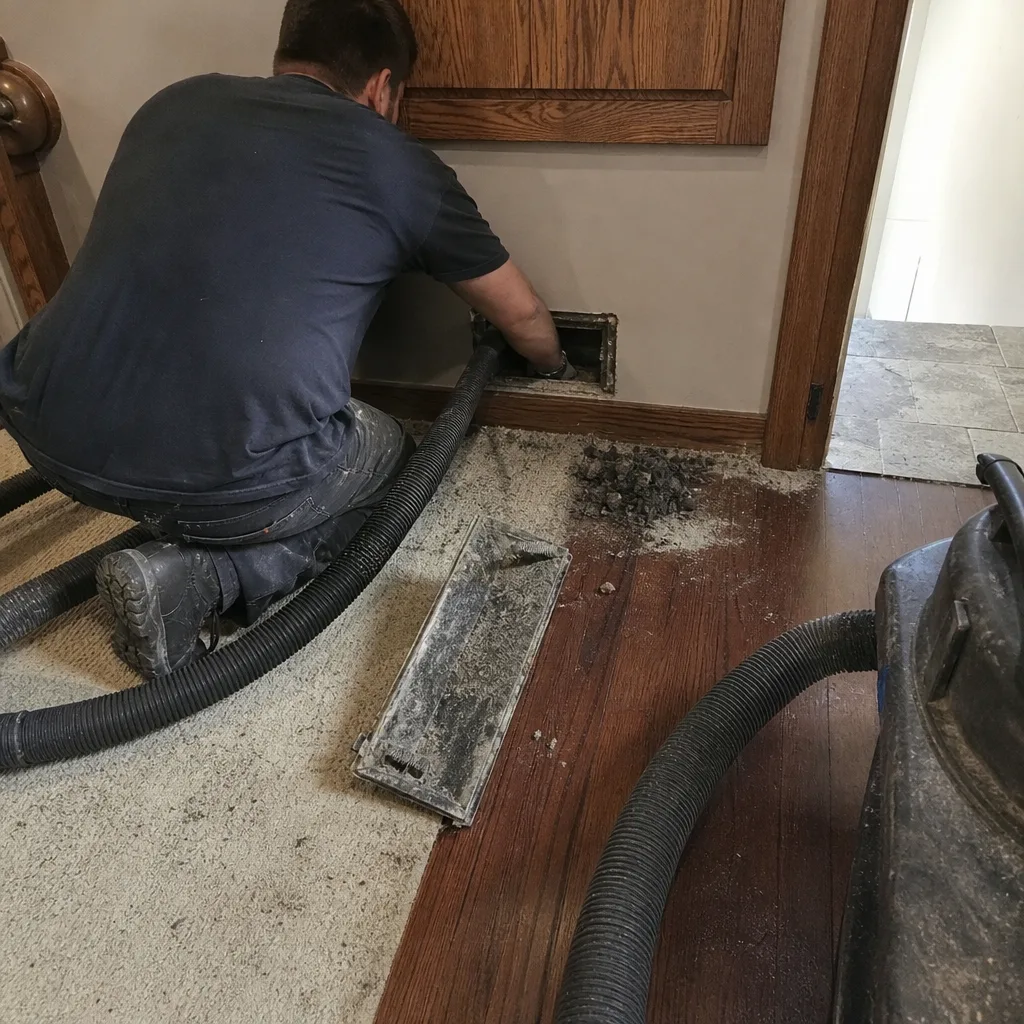 Before
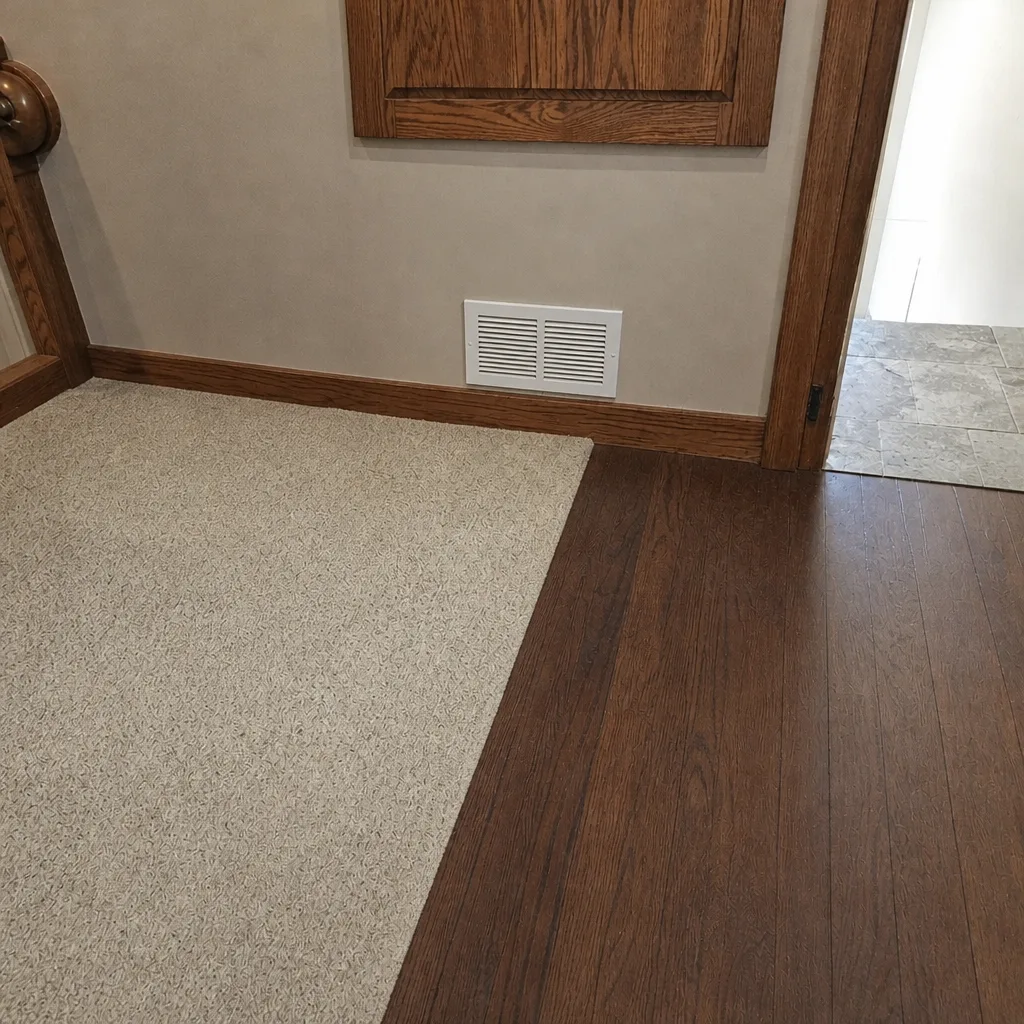 After
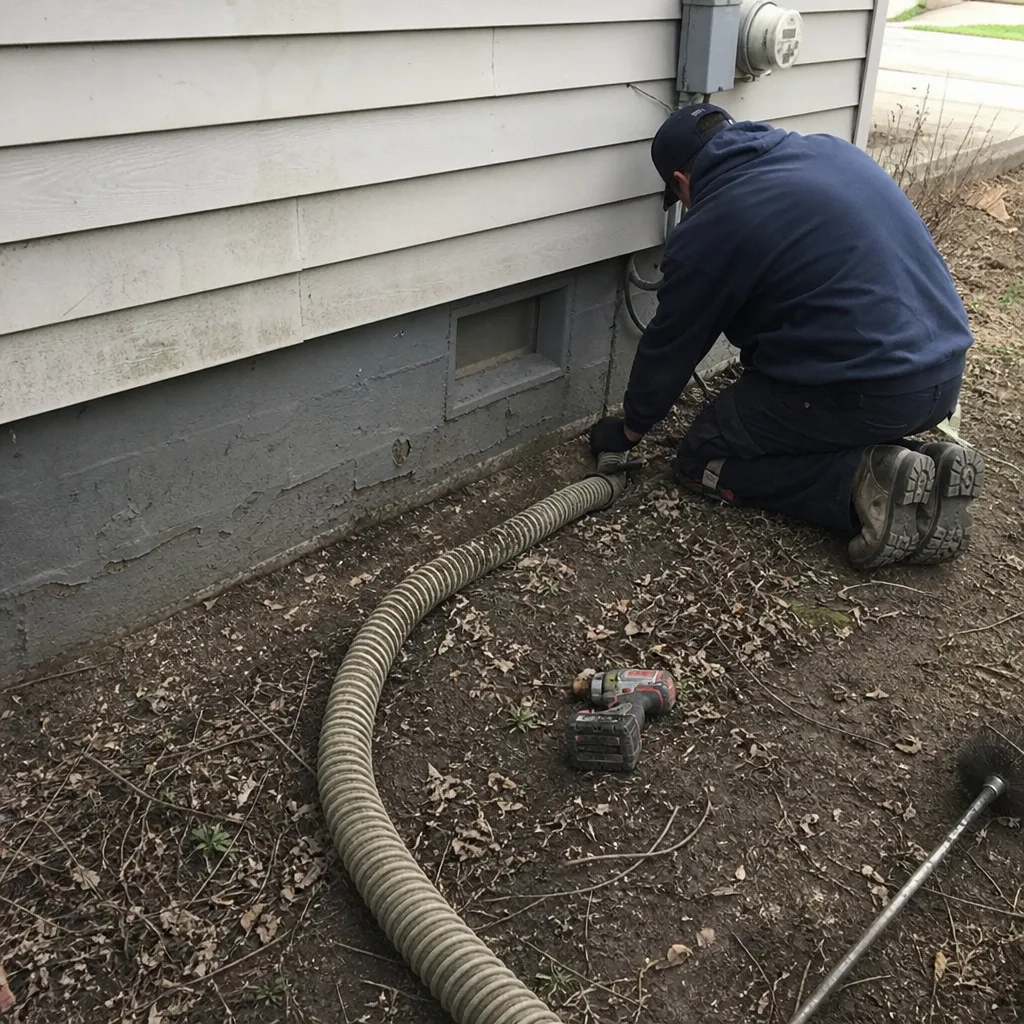 Before
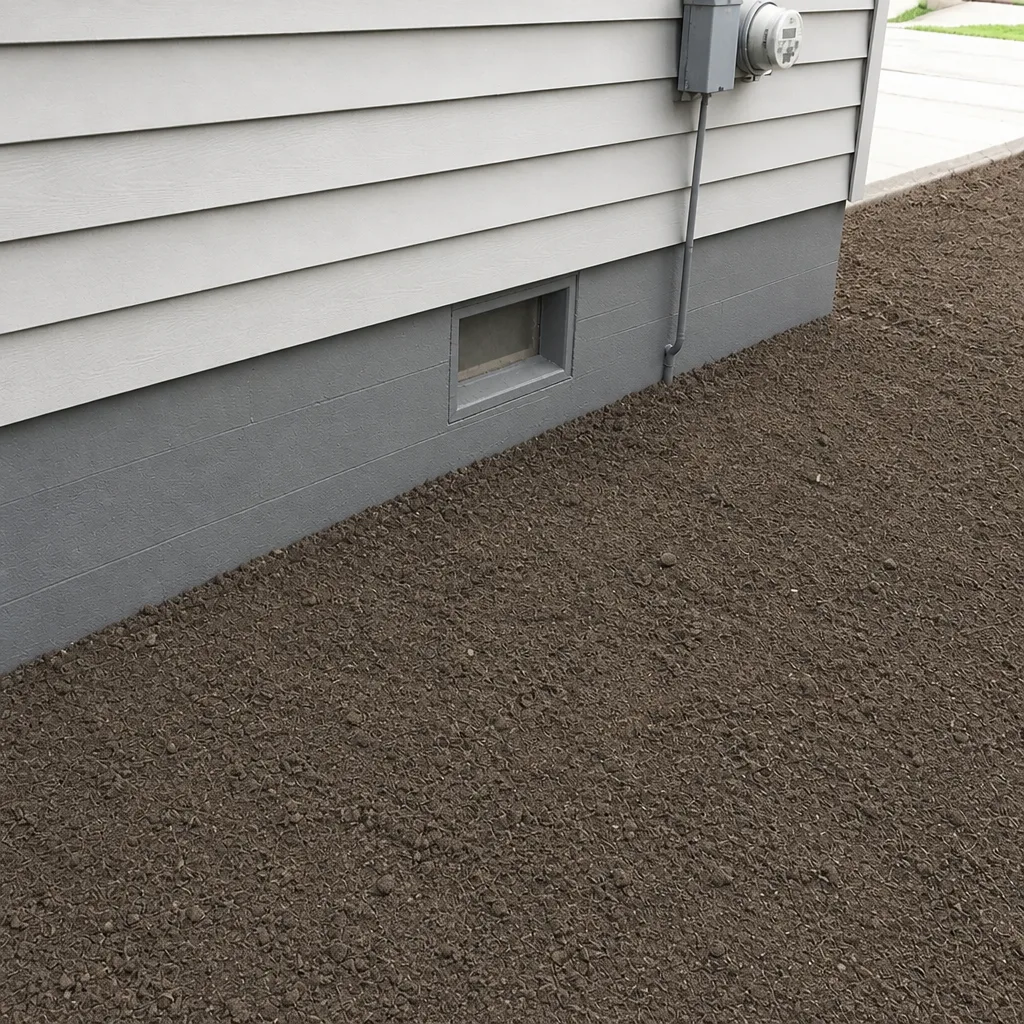 After
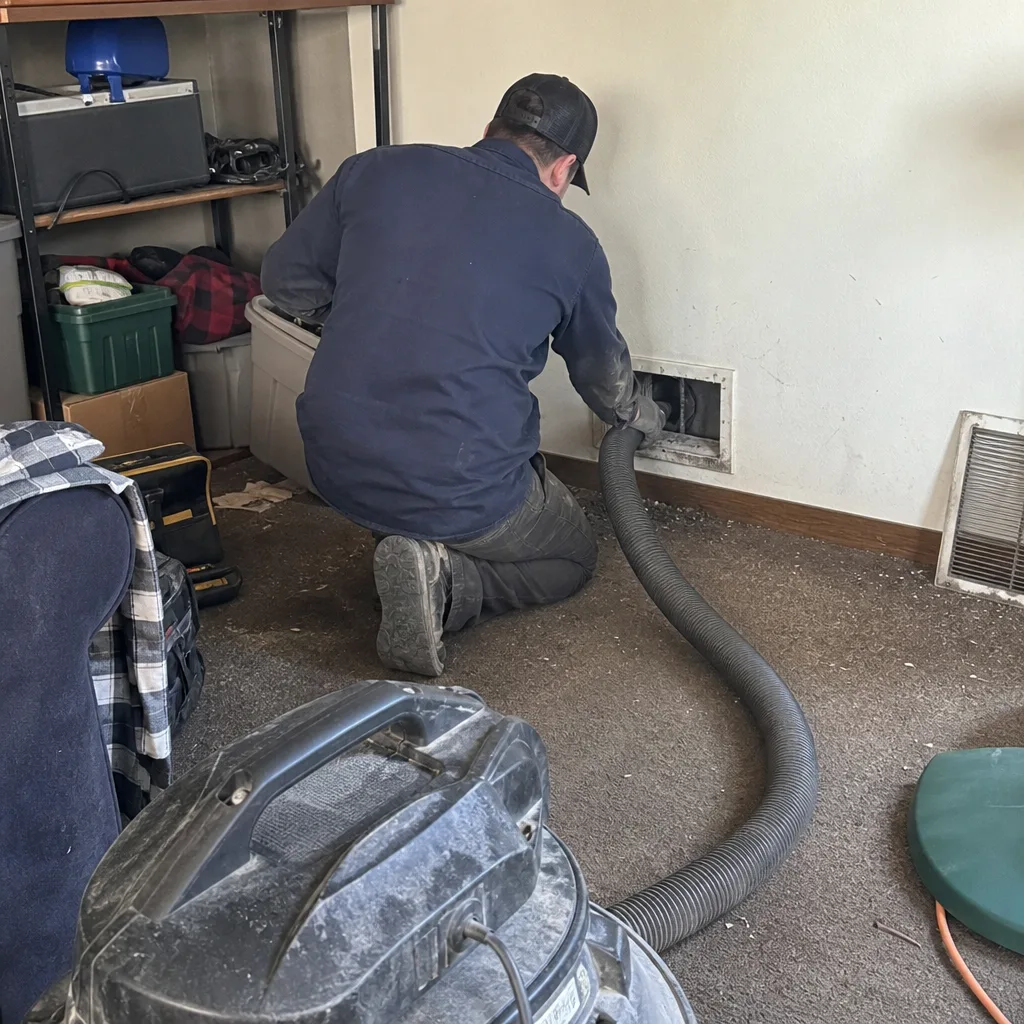 Before
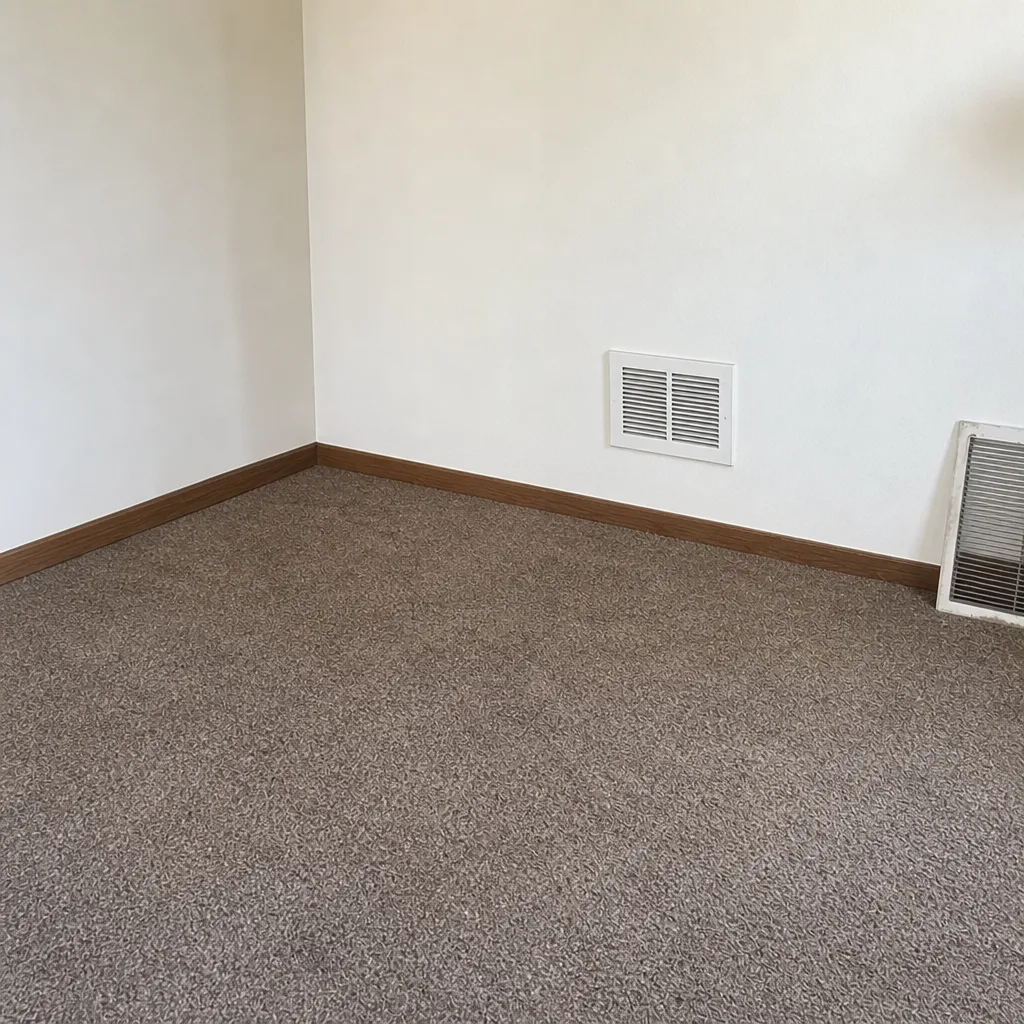 After
When to Call a Professional
A checklist is a diagnostic tool, not a substitute for trained eyes on the actual ductwork. Call a professional when any of the following applies: your filter loading rate has shortened noticeably with no obvious cause; a room has become persistently weak on airflow; you can see visible buildup inside a return box; you smell something musty at one register but not others; your ducts have been through a renovation or a major storm; or it’s been more than five years since the system was cleaned and you have no record of it. Any one of those is reason enough to get an inspection.
Duct Cleaning Fort Wayne offers free estimates in Fort Wayne. Call (844) 951-3807. We answer 24/7. Fast dispatch from 7am to 7pm, Sunday through Friday. Our technicians have up to 14 years of experience, and they’ll show you what they find before they recommend anything. Read more about duct cleaning Fort Wayne or ask about our other services. If it’s been a while, this is a good moment to book an inspection and start a written service history for your Fort Wayne home.
Frequently Asked Questions
Most Fort Wayne homes are fine with a full-system cleaning every three to five years, but the number should come from your filter log and airflow walkthrough, not the calendar alone. Homes with pets, recent renovation, or a history of leaks may need it more often, and some well-sealed homes go longer.
You can clean the register grilles and the inside of the return box, and that’s a useful part of routine maintenance. You can’t effectively clean the trunk lines and flex runs without professional-grade equipment. Portable vacuums that look suitable for the job don’t move enough air to lift settled debris from the ductwork, which is why professional cleaning uses systems from Rotobrush and Nikro.
Cleaning removes what’s already inside the ducts. Repair fixes the leaks, disconnected joints, and damaged runs that let contamination back in. If your filter loads fast or one room has weak airflow, you likely need repair rather than another cleaning, and treating only one of the two usually means the problem returns.
Yes, they belong on the same maintenance schedule. A clogged dryer vent is a leading cause of residential house fires, and in older Fort Wayne homes the vent runs are often long and loaded with turns, which traps lint faster. It’s a separate service from duct cleaning, and worth scheduling alongside it.
Filtration and humidity control do the work of keeping the system cleaner over time, which is where Honeywell and Aprilaire equipment come in. For contamination control and post-clean treatment, products from Abatement Technologies and Guardsman are the professional standard. The right combination depends on your system and your home, and we name the brands so you can verify them.
Ask for before-and-after photos of your own ducts. Every cleaning company claiming professional results should be able to show them, and we take them on every job so you have a record of what changed. Pair the photos with your own notes and filter log, and you’ll have a service history that’s easy to verify.
The Bottom Line
A duct maintenance checklist works when it measures something. Filter loading rate, airflow balance room by room, and the condition inside your return boxes give you three data points that track the health of your Fort Wayne duct system over time. Cleaning answers the evidence; repair fixes the cause. Keep the log, photograph the before and after, and add the dryer vent to the list. When the checklist points to something you can’t resolve from the outside, call (844) 951-3807 for a free estimate. We answer 24/7. Fast dispatch from 7am to 7pm, Sunday through Friday.
Written by the team at Duct Cleaning Fort Wayne.