
Last updated November 15, 2026
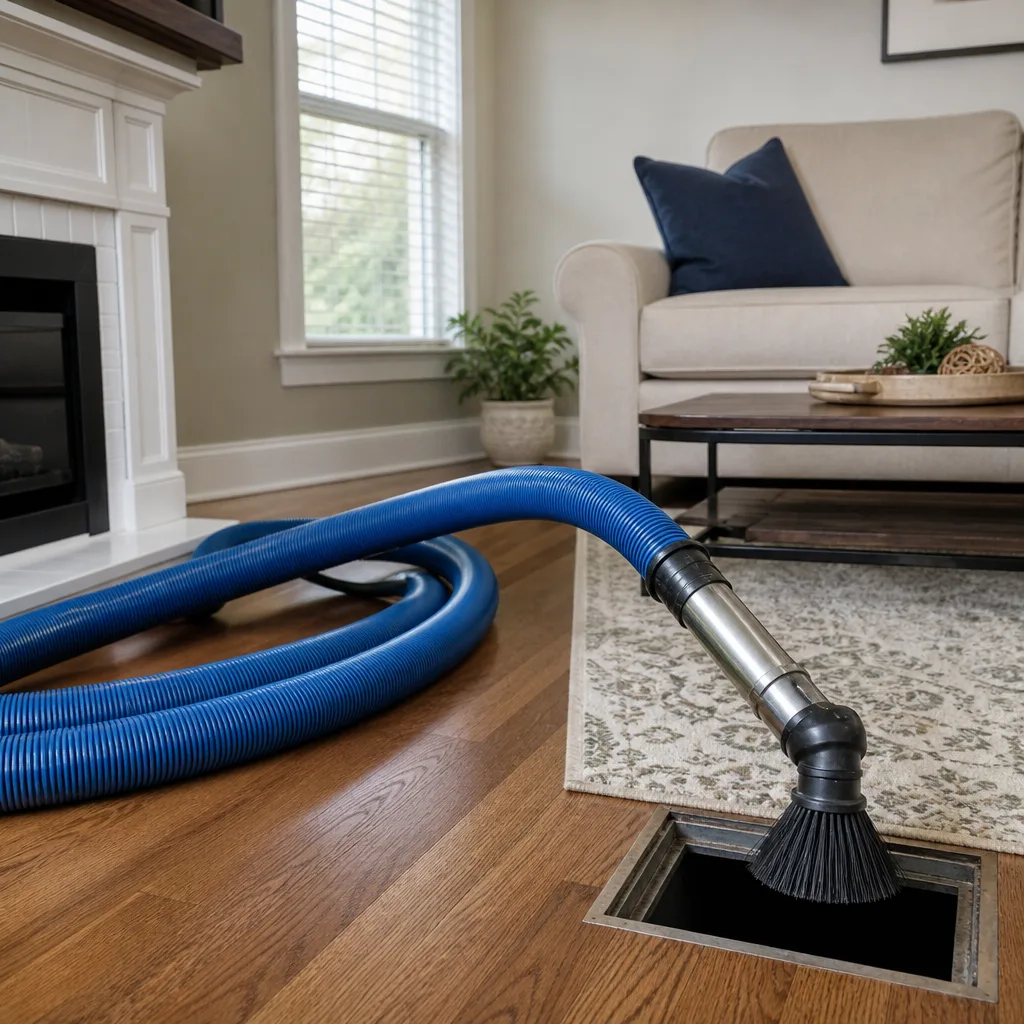 Whole-home duct cleaning
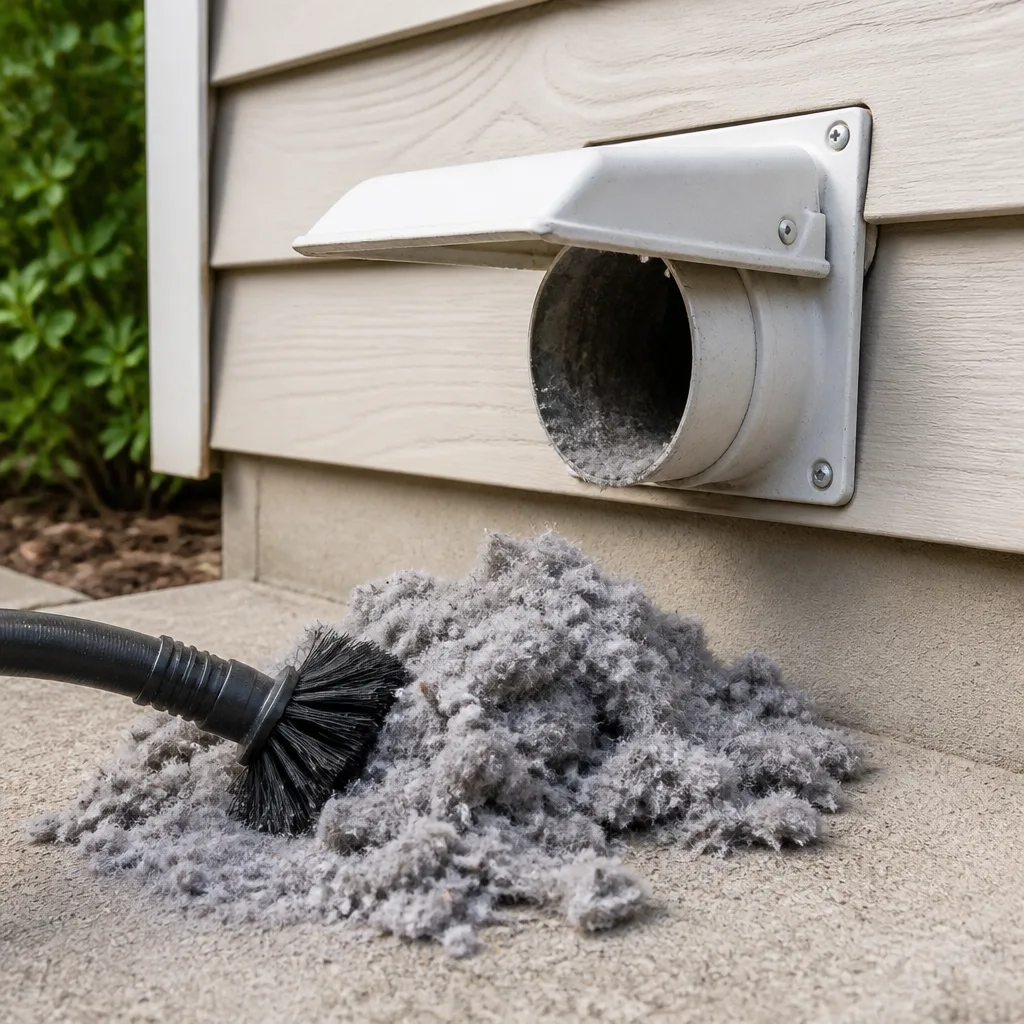 Dryer vent cleaning
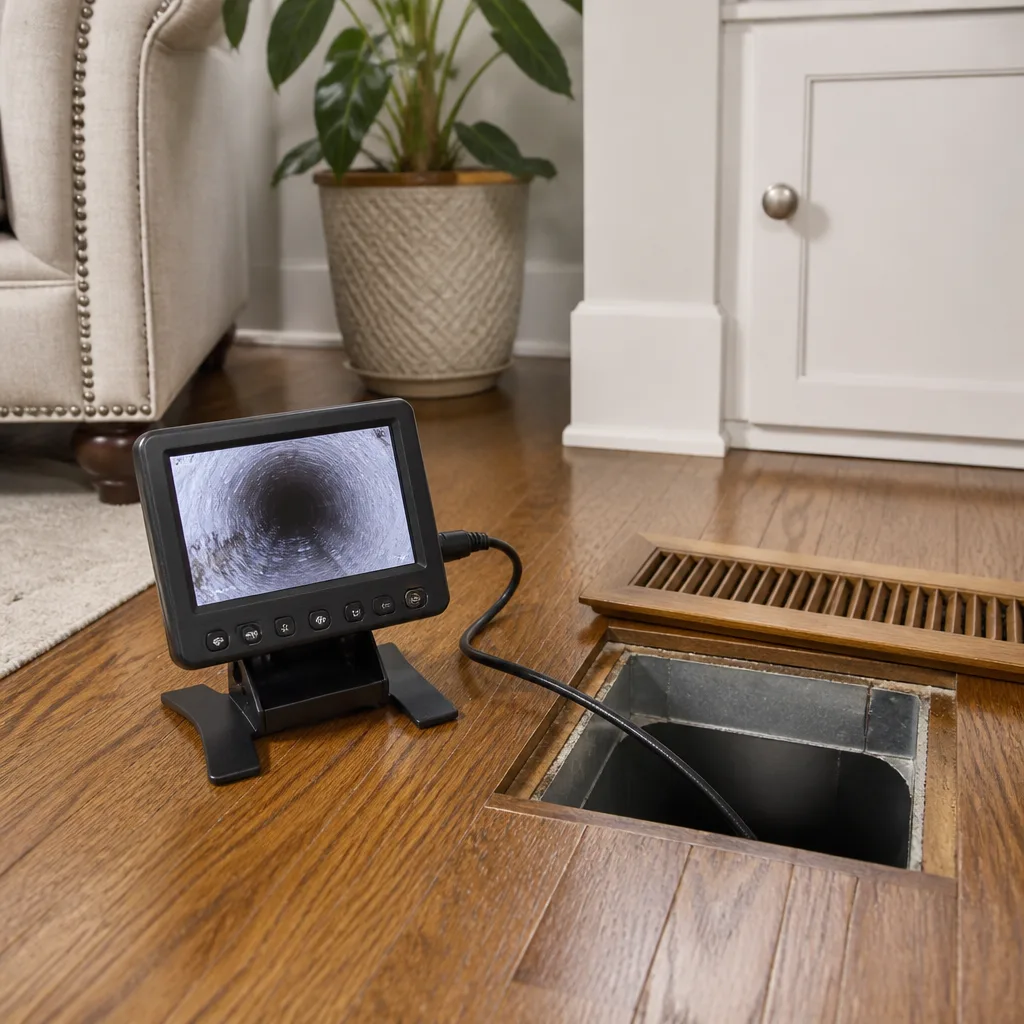 Camera inspection
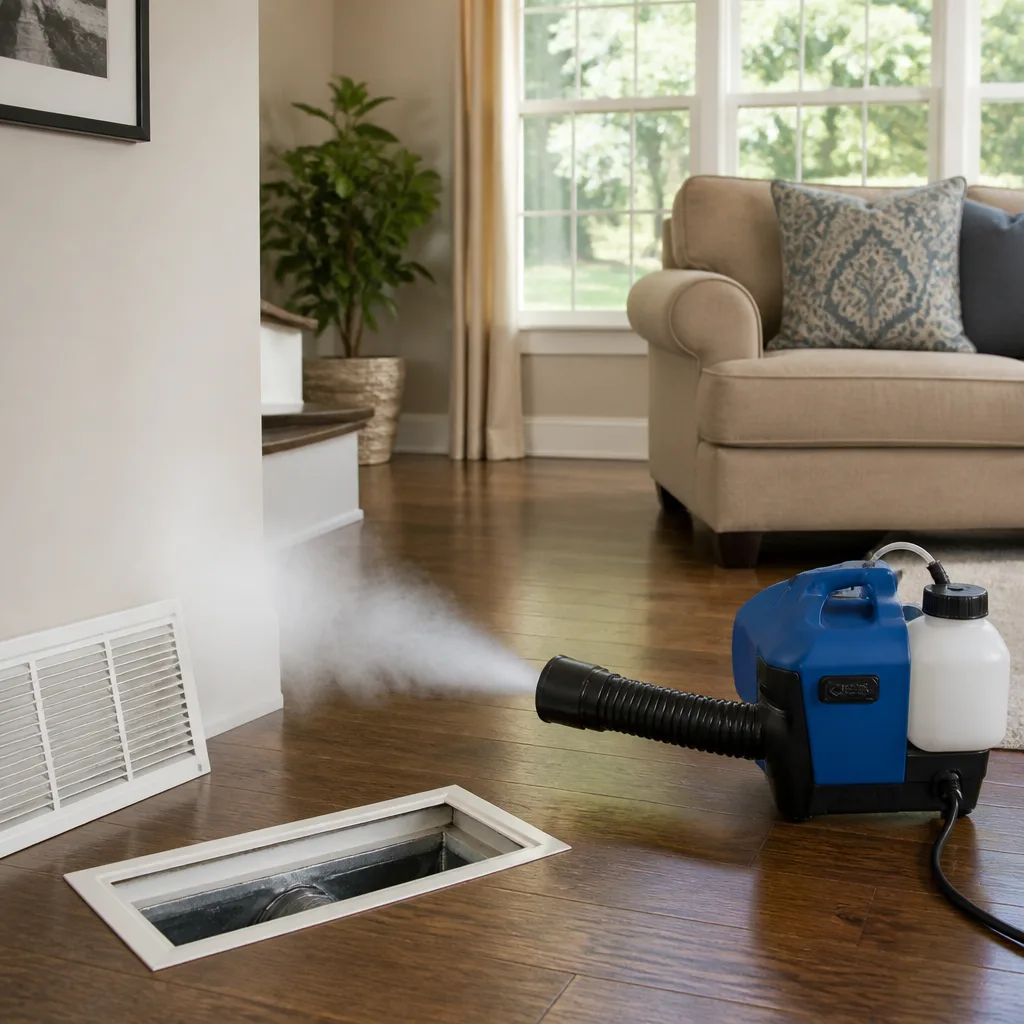 Sanitizing & deodorizing
Whole-system duct and dryer vent check with before-and-after photos - you see exactly what came out of your vents
That "$99 whole-house special" is a bait ad - the real number appears once they are in your hallway, or the "clean" is a shop-vac at the register. We photograph the inside of your ducts before and after instead.
The Complete Guide to Air Duct Cleaning in Fort Wayne
A single duct cleaning visit that skips the air handler, coil, and return plenum is the rough equivalent of washing only the visible walls of a room and calling it a renovation. Most homeowners in Fort Wayne think of duct cleaning as a cosmetic service, something you book when the vents look dusty or the house smells stale. That framing misses what the duct system actually is: a mechanical assembly of interdependent components, each of which affects the others. Clean the trunk line and leave a fouled evaporator coil in place and you have cleaned a system that will foul again within a season. This guide walks through the parts of a duct system most cleaners never touch, what Fort Wayne’s climate and soil do to ductwork, and how to verify the work was actually done. We’ll show you what a complete job looks like from the inside out.
Quick Answer
Air duct cleaning in Fort Wayne is a full-system service, not a vent-vacuuming visit. A complete job covers the supply and return ductwork, the air handler and blower, the evaporator coil, and the return plenum, using contractor-grade negative-pressure equipment like Rotobrush and Nikro systems. If the ducts leak, cleaning alone won’t hold: a thorough service also examines and repairs the system’s structural leaks so the work stays effective. Call (844) 951-3807 for a free estimate.
Styles & brands we work with
- Whole-home duct cleaning
- Dryer vent cleaning
- Camera inspection
- Sanitizing & deodorizing
Table of Contents
- Why Fort Wayne Ductwork Collects More Debris Than You Think
- The Anatomy of a Duct System (And What Budget Cleaners Skip)
- What Contractor-Grade Equipment Actually Does
- How Duct Leakage Undermines Cleaning Results
- Dryer Vents: The Fire-Safety Side of Airflow
- How to Verify the Cleaning Was Thorough
- Common Mistakes to Avoid
- Frequently Asked Questions
Why Fort Wayne Ductwork Collects More Debris Than You Think
Fort Wayne sits on clay-heavy soil with a water table that shifts with the seasons. That single fact affects ductwork indoors more than most homeowners realize. During wet stretches, foundation moisture rises; during the dry weeks of late summer, the soil shrinks and the house breathes differently. Neither situation is a plumbing problem, but both influence the humidity inside your walls, your crawlspace, and eventually the airstream the HVAC system pulls through the returns.
Layer humidity swings on top of the area’s four-season temperature range, and ductwork in Fort Wayne is exposed to the kind of cycling that taxes the system year round. The furnace runs hard in January, the AC runs hard in July, and between them sits a stretch in spring and fall where neither is pulling much conditioned air. That idle period is when mold spores and fine particulates settle in place and become the food source for the next season’s debris buildup. Duct cleaning in Fort Wayne that only removes what’s visible at the supply grill misses the deeper pileup in the trunk and the plenum behind the air handler.
We see the same pattern in older Fort Wayne neighborhoods and in newer subdivisions alike. According to what our technicians observe, homes with pets, homes with allergy sufferers, and homes with young children all collect different types of particulate. Pet dander clings to the flexible duct inner lining. Pollen from the tree canopy along the river parks drifts in through return grilles during April and May. Construction dust from nearby remodeled homes finds its way into the supply side. A single cleaning approach won’t fit every house, which is why the equipment and the process have to be adjustable, not fixed.
One more factor specific to Fort Wayne: many homes here use basement air handlers, and basement ductwork runs at higher relative humidity than the rest of the house. That means the first section of duct past the air handler often accumulates more dust and microbial growth than the supply runs upstairs. If a cleaning skips that section, it skips the most contaminated part of the system.
The Anatomy of a Duct System (And What Budget Cleaners Skip)
Ask a homeowner to describe their duct system and most will point to the supply vents in each room. That’s roughly ten percent of the actual assembly. A complete, whole-home duct system has eight main components, and any one of them can hold (and release) debris independently.
- Return air grilles and returns. These pull air back into the system. In Fort Wayne, many homes have floor-mounted returns near the center of the house, and that’s where pet hair and dust accumulate first.
- Return trunk ductwork. The larger main line carrying return air back to the air handler. Rarely visible, almost never cleaned by low-cost providers.
- The return plenum. The transition box between the return trunk and the air handler cabinet. Often heavy with settled debris.
- The air handler cabinet and blower. The blower wheel is a fan with dozens of narrow blades. Dust, pollen, and biofilm coat those blades and throw the blower off balance over time.
- The evaporator coil. The AC’s cooling coil. Wet during summer operation and therefore prone to biological growth. If the coil isn’t cleaned, the air passing over it picks up contaminants on the way to the supply side.
- The supply plenum and trunk. The distribution main moving conditioned air out to the branches.
- Branch supply ducts. The runs to individual rooms. This is what most cleaners actually touch.
- Supply boots, registers, and grilles. The visible final point. Cleaning these and nothing else is what makes a $99 coupon visit look like a value on paper.
When a provider skips items 2 through 6, the cleaning appears to work. Supply air smells fresher for two weeks. Then the system pulls debris from the return plenum and the wet coil straight back into the trunk, and the homeowner is right back where they started. Every component in this list is part of a proper service, and the only reason a provider would skip one is that cleaning it takes time, equipment, and skill. Schedule a full-system air duct cleaning and ask directly which of these eight components the technician will touch before the visit begins.
What Contractor-Grade Equipment Actually Does
The difference between consumer-grade duct cleaning and the professional kind comes down to one mechanism: negative pressure. When a technician works with a shop vac and a brush, the debris knocked loose in one section of duct travels through the airstream and lands somewhere else in the system. It’s dust displacement, not dust removal. Contractor-grade equipment changes that dynamic.
Rotobrush and Nikro systems, the same equipment used by commercial contractors, generate continuous high-volume negative pressure inside the ductwork. A vacuum hose connected at a strategic point keeps the entire system under suction while a rotary brush assembly travels through the supply and return lines. Everything the brush releases is pulled out of the system in real time. No debris escapes into the house. No debris is pushed downstream into a section the technician hasn’t cleaned yet.
The practical differences show up in three ways:
- Suction volume. Professional units move several times the air volume of a portable shop vac, which is what holds a whole system under negative pressure instead of just the section being brushed.
- Rotary agitation. The rotary brush assemblies reach past the first layer of dust and lift the adhered biofilm, dander, and settled particulate that passive suction cannot remove.
- HEPA filtration. The exhaust air is filtered through HEPA-rated media, so the fine particulate leaves the house instead of covering the furniture.
We use Rotobrush and Nikro equipment on every job and we name the brands on purpose. When a provider won’t tell you the equipment they use, that’s information you can act on. Ask on the call. If the answer is “portable unit” or “shop vac,” the cleaning isn’t going to reach the compromised parts of the system, no matter how many vents the technician opens.
What contractor-grade equipment doesn’t do is fix the system itself. A dirty duct that is structurally intact cleans beautifully. A dirty duct that leaks through thirty failed seams cleans on Tuesday and refouls by June. The equipment and the repair work together; neither can do the other’s job. For the rest of how that plays out, our overview of duct cleaning in Fort Wayne walks through the clean-repair-protect framing we work from.
How Duct Leakage Undermines Cleaning Results
Duct leakage is the reason some duct cleanings visibly fail within a few months. The duct system in a typical Fort Wayne home was not designed as an airtight assembly. Seams at the plenum, the branch takeoffs, and the register boots are taped, stapled, or press-fit together. Over years of thermal cycling, that tape degrades. Those staples loosen. The duct becomes something more like a colander than a pipe.
A leaky return pulls attic air, crawlspace air, garage air, and insulation fibers into the airstream. A leaky supply pushes conditioned air out of the system (and therefore loses the energy the homeowner paid for). Both means the system is circulating more than just what the filters catch. You can’t fully clean a system that is continually introducing new contamination from outside the ductwork itself. That’s why cleaning without examining the seams and joints is a partial service.
Air duct repair works in parallel with cleaning, not after it. Structural repairs address the specific failures that duct systems usually develop:
- Failed seam tape and mastic. The most common issue on trunks and plenums.
- Loose register boots. Gaps around the boots leak air behind the drywall or into the floor cavity.
- Disconnected flexible runs. In attic or crawlspace, a flex run can slip off its connection with no obvious symptom except a room that’s harder to heat or cool.
- Collapsed or crushed sections. From settled insulation, stored items, or original installation errors.
Our technicians repair these as part of the service visit when the diagnosis supports it. It’s not an upsell. A leaky duct is the root cause of everything a cleaning is supposed to prevent. Fix the seam and the next cleaning holds. Skip it and you’re on a cleaning treadmill. For Fort Wayne homeowners with basement air handlers, the transition between the basement cabinet and the upstairs trunk is often the highest-value piece of repair we can make.
We treat air-quality protection as the third step after clean and repair. Once the ducts are clean and the leaks are closed, we install recognized air-quality products from brands like Honeywell and Aprilaire for filtration and humidity control, and use Abatement Technologies and Guardsman products where contamination control or post-clean treatment is indicated. The clean job removes what’s there. The right product prevents a repeat visit for the same reason.
Dryer Vents: The Fire-Safety Side of Airflow
Dryer vent cleaning is a separate service from duct cleaning, and it exists because of a fire risk that too many homeowners underestimate. The lint that accumulates in a dryer vent is highly combustible. Restricted airflow from a blocked vent accelerates the problem by trapping heat in the dryer and forcing the appliance to work harder than it was designed to. A dry vent cycle is a safe cycle. A restricted vent is not.
In Fort Wayne, the geography matters. Dryers are often on the main floor, sometimes in the basement, and the vent run to the exterior wall can be longer than the straight shot in newer construction. Long vent runs, elbows, and transition sections are where lint accumulates fastest, and where a homeowner can’t see it by pulling the dryer out. A length of flex duct running up to a roof or side-wall vent is almost guaranteed to have accumulated significant lint if it hasn’t been cleaned in years.
The service itself is straightforward. We use the same professional vacuum and brush equipment we use on HVAC ducts, on a smaller scale. The steps are:
- Disconnect the dryer from the vent (with the power off).
- Run a rotary brush down the length of the vent from the exterior termination point.
- Capture lint with negative-pressure HEPA filtration so nothing is released into the house.
- Inspect the exterior damper to confirm it opens freely and closes properly.
- Reconnect the vent and confirm the exhaust is flowing.
Dedicated dryer vent cleaning is not an add-on we offer as an afterthought. It’s a fire-safety service, and it’s one of three core jobs we do. If you haven’t had the dryer vent cleaned in years, that’s a conversation worth having before the next load of towels goes in. We’ll inspect it during any duct cleaning visit and tell you what we see.
How to Verify the Cleaning Was Thorough
One of the most important things you can do as a homeowner is know what a completed duct cleaning should look like, because the industry has earned some of its skepticism through incomplete work that’s hard to spot after the fact. These are the benchmarks we use when we inspect our own work, and they’re benchmarks you can use to evaluate any provider.
- Before-and-after photos of your own system. Not stock photos. Your trunk line, your blower wheel, your evaporator coil, your return plenum. The photo should show the same point before and after. If a provider doesn’t photograph their work, ask why.
- A blower wheel that’s visibly clean. The blower wheel blades should look like blades again, not blades with a coating of gray fur.
- A coil that’s visibly clean between fins. The evaporator coil is where microbial growth collects. It should be free of visible biofilm before the cabinet is closed.
- Register grilles and boots wiped down. Cleaning stops at the grill not the duct. A thorough job touches both.
- No chemical smell in the house after the visit. Post-clean treatment from Guardsman or Abatement Technologies should leave the ducts clean, not scented. If the house smells like a hotel lobby, you’re covering up a problem, not solving one.
- An inspection report or written summary. Note which of the eight components were cleaned. Which were inspected. Whether any repairs were recommended.
- Airflow that’s measurably better. After a thorough cleaning and any indicated repairs, supply air from each register should feel stronger and the room-to-room balance should be more even.
Clean it, fix it, protect it. That’s the sequence we work from. Not every job needs all three, but every job should start with the clean and end with a straight answer about what the system actually needs. If you want a second opinion on work another provider has already completed, we can inspect and say what we see. Call (844) 951-3807 for a free estimate.
Common Mistakes to Avoid
- Booking on price alone. A single low per-vent price cannot cover cleaning the air handler, coil, and plenum. If the quote is much cheaper than other quotes in Fort Wayne, assume the eight components won’t all be touched.
- Skipping the air handler and coil. The most contaminated part of the system is also the part most commonly skipped. Ask directly whether the blower wheel and coil will be cleaned and photographed.
- Cleaning before repairing. A duct with failed seams introduces new contamination every hour the system runs. Fix the seam first or the cleaning won’t hold in a Fort Wayne summer.
- Trusting a shop vac on a whole-home duct system. Consumer-grade suction moves debris around rather than out. Contractor-grade equipment with continuous negative pressure is the only safe way to pull settled debris out of long trunk runs.
- Ignoring the dryer vent. A blocked dryer vent is a documented fire risk. If your vent run is long, elbow-heavy, or hasn’t been touched in years, it’s overdue.
- Accepting “before” photos you didn’t see. Photos should be taken of your system, at the time of the visit, and shown to you. Stock photos are not verification.
- Forgetting seasonal timing. Fort Wayne’s spring humidity swings are when accumulated debris has the best conditions to support microbial growth. Cleaning in late spring or early summer, before the AC runs hard, captures the worst of it before the cooling season amplifies the problem.
See the difference
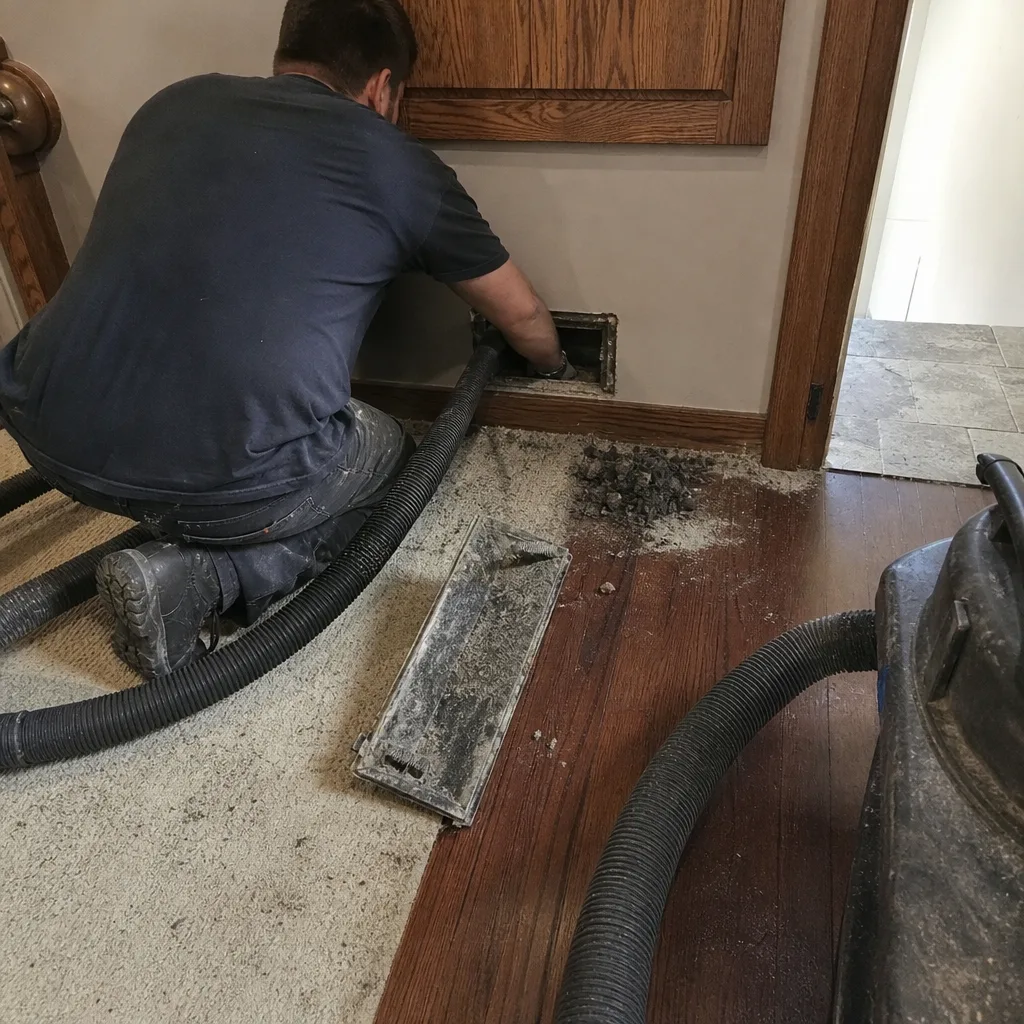 Before
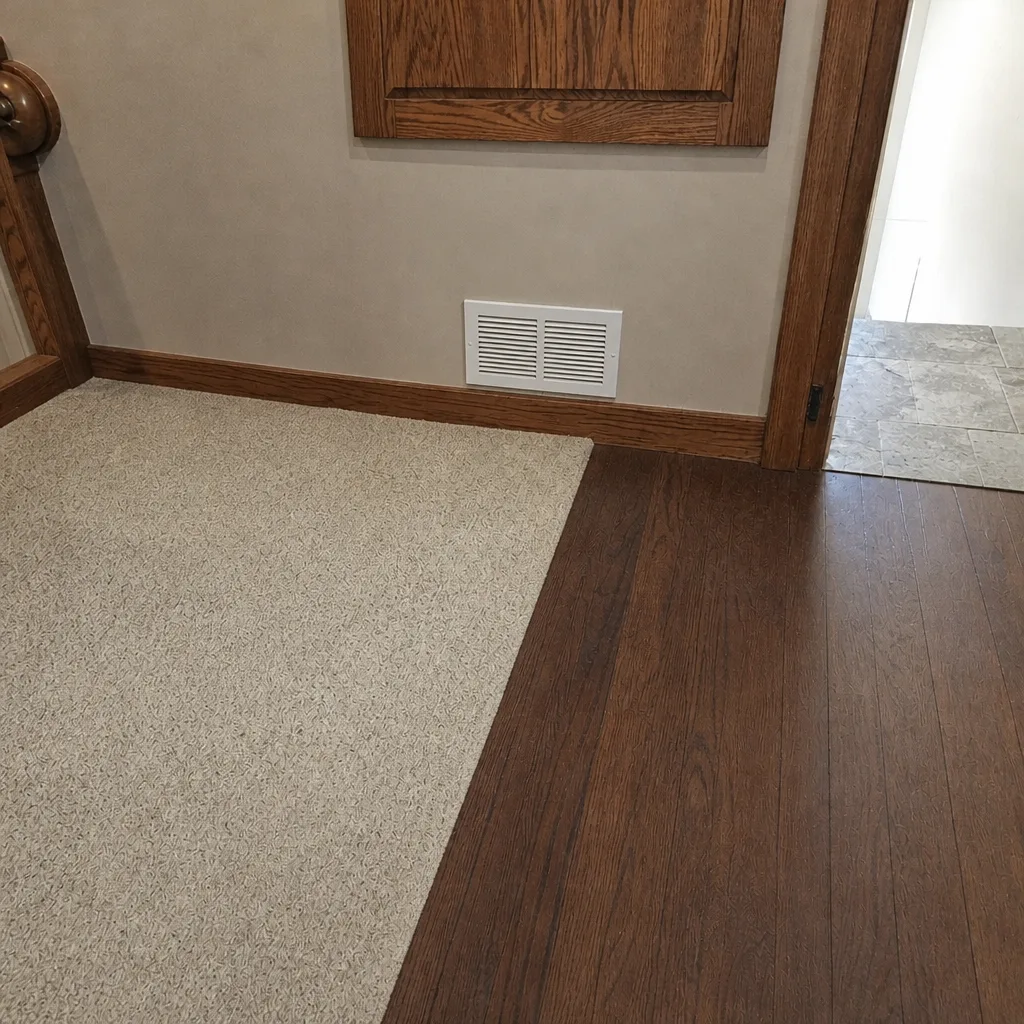 After
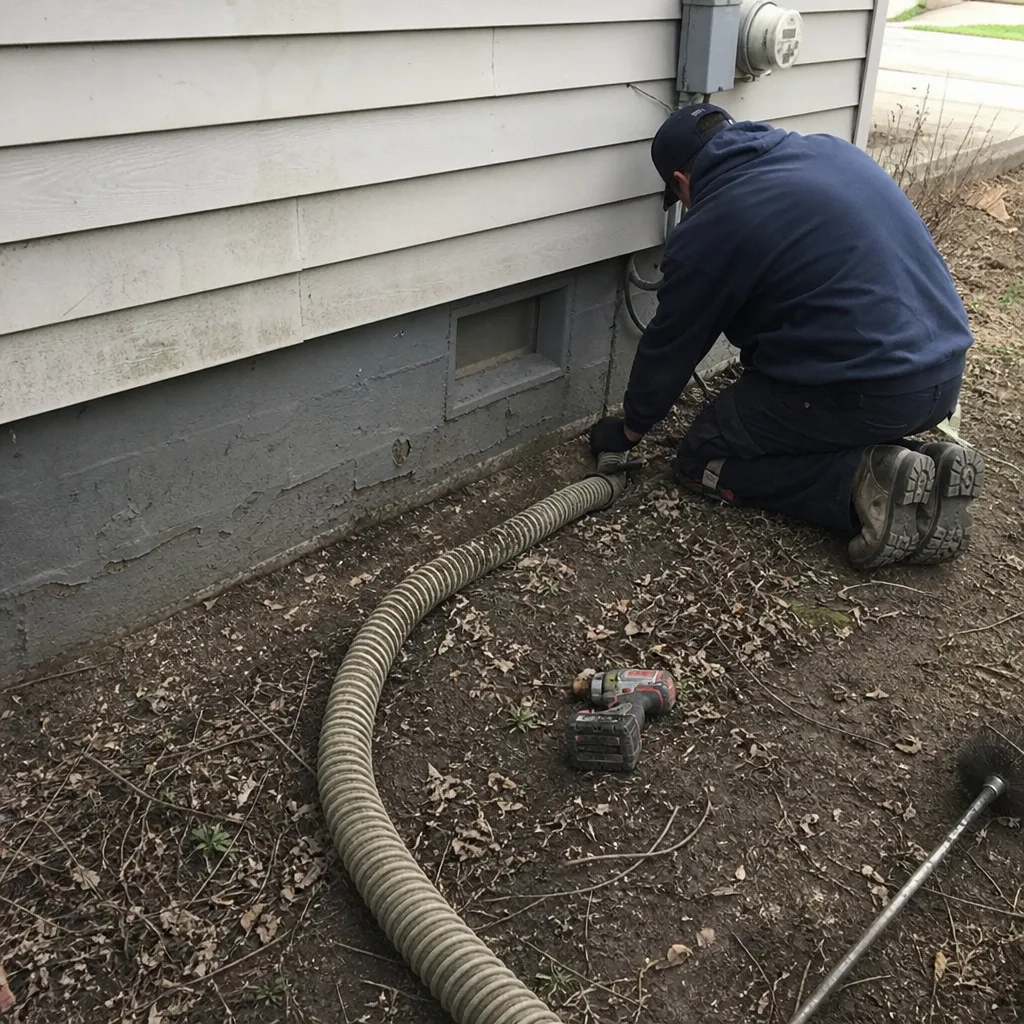 Before
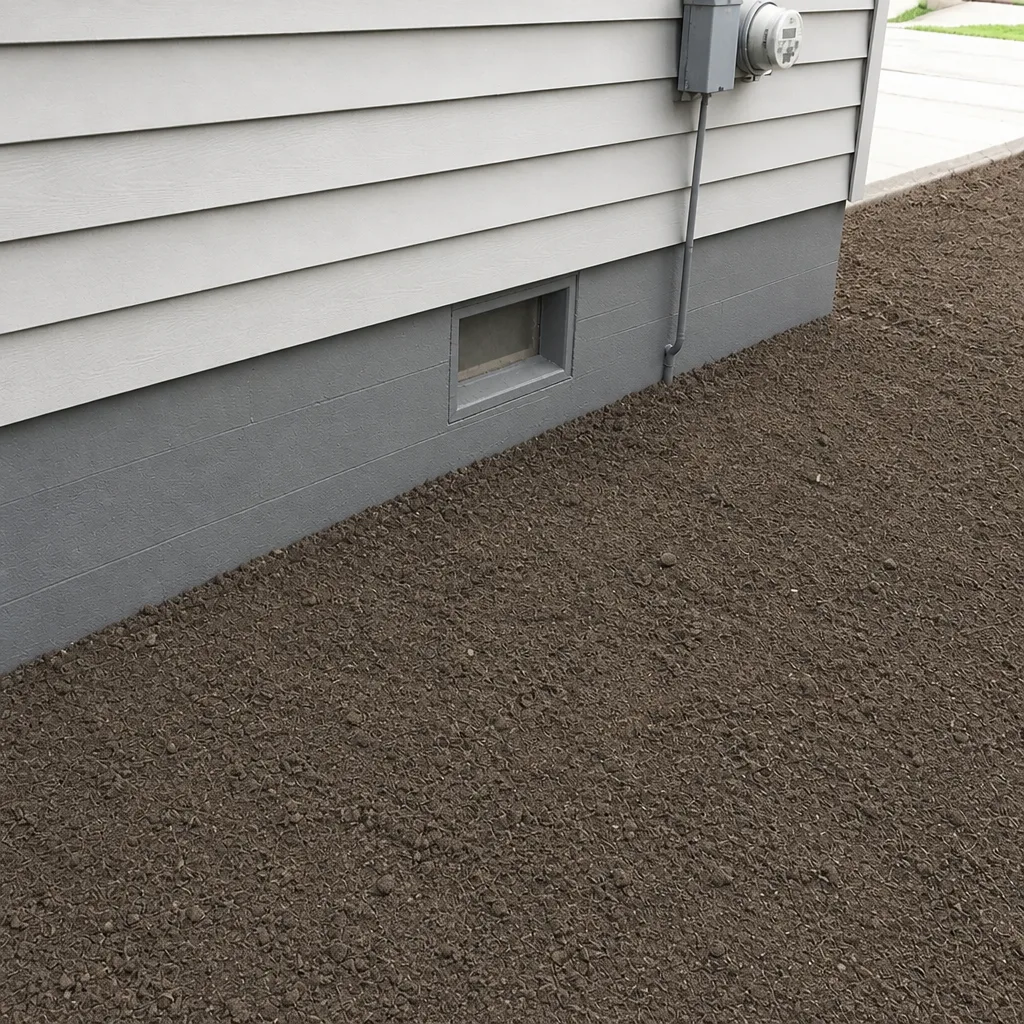 After
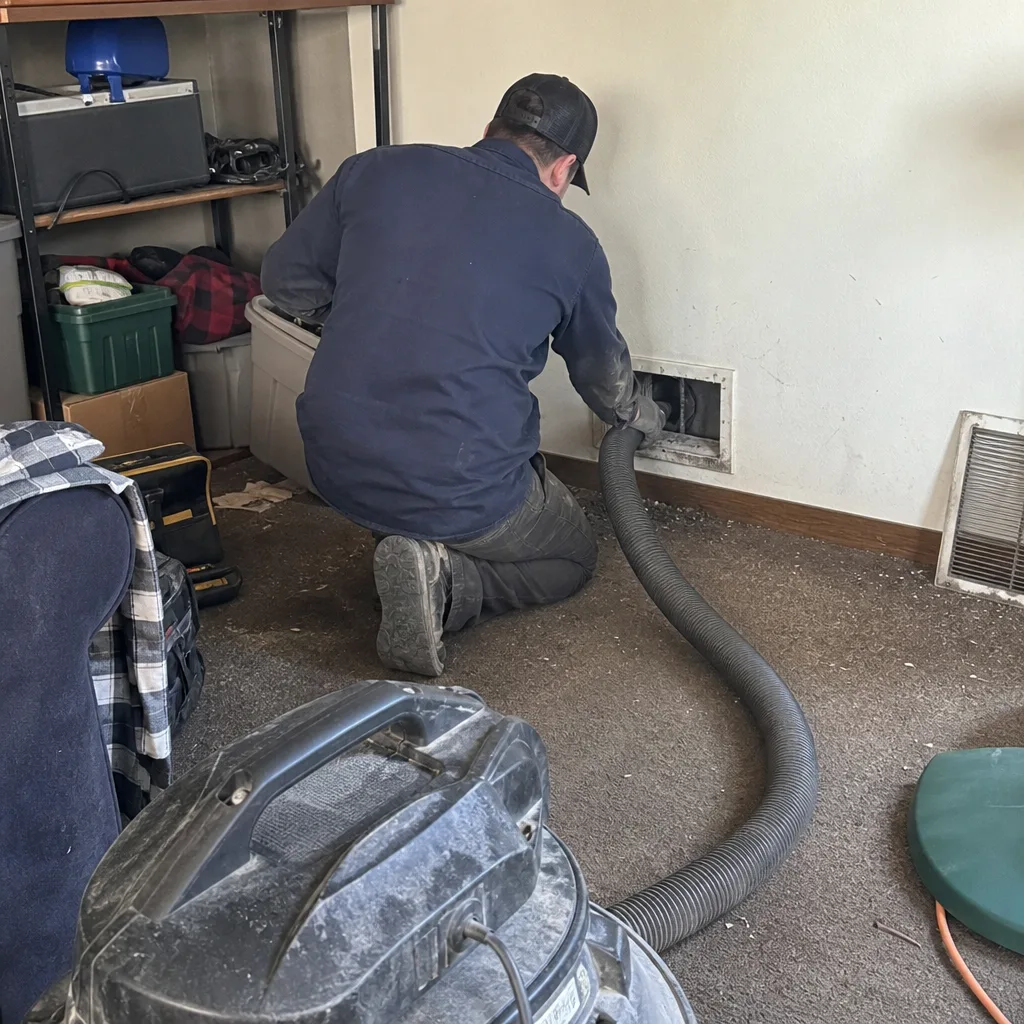 Before
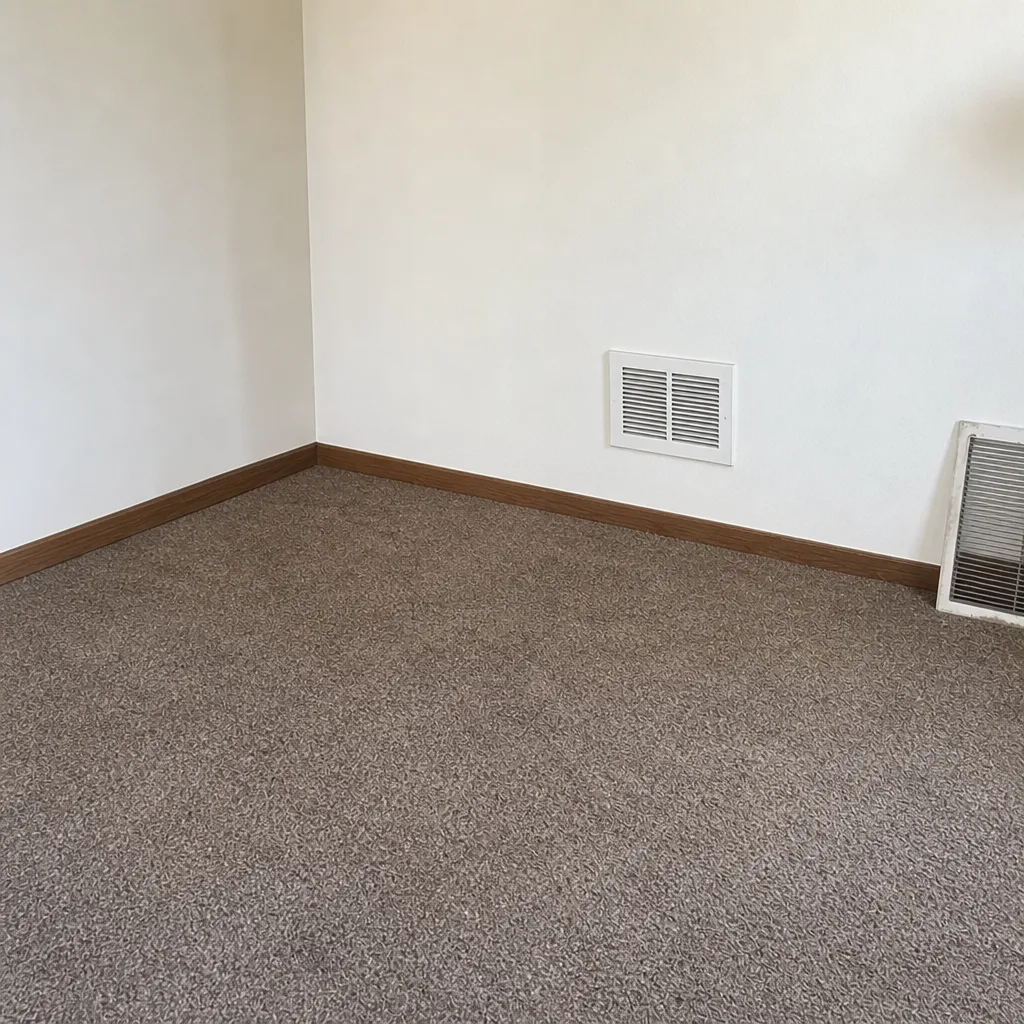 After
When to Call a Professional
Some duct conditions are cosmetic and can wait. Others can’t. Call a professional in Fort Wayne when the supply grilles show visible dust trails within a week of cleaning them, when a room’s airflow is noticeably weaker than the rest of the house, when the house has a persistent musty odor that doesn’t clear after ventilation, or when you’ve recently finished a major remodel (drywall dust is fine enough to coat an entire duct system). Also call if the house has new occupants and you don’t know the service history, if anyone in the household has asthma or allergies with unexplained triggers, or if the furnace or AC has started running longer cycles to reach the same temperature. Duct Cleaning Fort Wayne offers free estimates in Fort Wayne for any of these situations. Call (844) 951-3807. We answer 24/7. Fast dispatch from 7am to 7pm, Sunday through Friday.
Frequently Asked Questions
Most full-system duct cleanings in Fort Wayne fall into a broad range depending on square footage, number of systems, level of contamination, and whether structural repair is needed. We don’t quote per vent, and we don’t use a teaser coupon figure. Our price is a flat price per system agreed before any work starts and set by the written estimate. Call (844) 951-3807 for an exact quote. Estimates are free.
Cheap quotes typically leave out the air handler, blower wheel, evaporator coil, and return plenum. They clean the visible supply branches and nothing else. They may also use portable, consumer-grade vacuums that can’t hold a whole system under negative pressure. A quote that looks half the price usually covers a fraction of the system. Call (844) 951-3807 for a quote that covers all eight components.
You’ll see it in the before-and-after photos of your own system, not stock images. Look for a visibly clean blower wheel, clean coil fins, wiped grilles, and an inspection report listing which components were cleaned. If a provider can’t show you the photos, that’s the answer. Call (844) 951-3807 for a free estimate and we’ll walk you through what we’ll photograph.
Every few years is right for most homes, but Fort Wayne’s specific conditions shift that. Homes with pets, allergy sufferers, recent remodeling, or basement air handlers may benefit from more frequent service. Homes with new ductwork and no contamination sources can stretch longer. The honest answer is: inspect first, then decide. Call (844) 951-3807 to book an inspection.
Yes, when the equipment is built for it. Contractor-grade systems like Rotobrush and Nikro hold the ductwork under negative pressure and exhaust through HEPA filtration, so debris is captured rather than released into the house. Pets and family can stay in the house during the work. Call (844) 951-3807 to schedule.
They’re separate services on separate systems. Air duct cleaning addresses the HVAC ductwork, air handler, blower, and coil. Dryer vent cleaning addresses the exhaust run from the dryer to the exterior wall, which accumulates combustible lint. Both matter, and we perform both as dedicated services. Call (844) 951-3807 to book either.
Yes. Air duct repair is a core service, not an upsell. We address failed seam tape, disconnected flex runs, loose register boots, and crushed sections as part of the service visit whenever the inspection supports it. Cleaning a leaky duct without repairing the leak is the most common reason a cleaning doesn’t last. Call (844) 951-3807 for a free estimate on a combined clean and repair.
We source and install Honeywell and Aprilaire filtration and humidity-control products, and we use Abatement Technologies and Guardsman for contamination control and post-clean treatment. Naming the brands is part of how you verify the work. Call (844) 951-3807 to discuss which products fit your system.
The Bottom Line
Duct cleaning in Fort Wayne works when the full system gets treated as a system. That means the air handler, coil, return plenum, supply trunk, and branches all get attention, not just the visible grilles. It means the equipment is the contractor-grade kind that holds continuous negative pressure and captures debris rather than displacing it. It means the cleaning is paired with structural repair so the work holds through the next seasonal humidity swing. And it means the verification is real: your photos, your inspection report, your airflow. If any of those pieces is missing, the cleaning isn’t done. Call (844) 951-3807 for a free estimate. We answer 24/7. Fast dispatch from 7am to 7pm, Sunday through Friday.
Our technicians have up to 14 years of experience. We name our equipment brands (Rotobrush and Nikro) so you can verify them. We perform all three core services (air duct cleaning, dryer vent cleaning, and air duct repair) with the same contractor-grade standard. Client education comes first: if a free estimate doesn’t justify the service, we’ll say so. Fort Wayne homeowners can reach us any time at (844) 951-3807 to book a visit or ask a question. Learn more about how we work across Fort Wayne.
Written by the team at Duct Cleaning Fort Wayne.