
Nikro Air Duct Cleaning in Fort Wayne: A Homeowner’s Guide
Here’s the thing about Nikro equipment: a contractor can own a Nikro machine and still deliver a substandard cleaning. The machine doesn’t decide how well the job goes. The person running it does. If they skip negative air pressure verification, rush the dwell time on the rotating brushes, or fail to protect the air handler during extraction, the brand name on the side of the equipment means very little. For Fort Wayne homeowners trying to evaluate a quote, understanding what the gear actually does, and what a technician should do with it, is far more useful than comparing price lists.
If you’d rather have a trained technician handle it than sort through the details yourself, call (844) 951-3807 for a free estimate.
How does Nikro’s negative-pressure extraction system actually work?
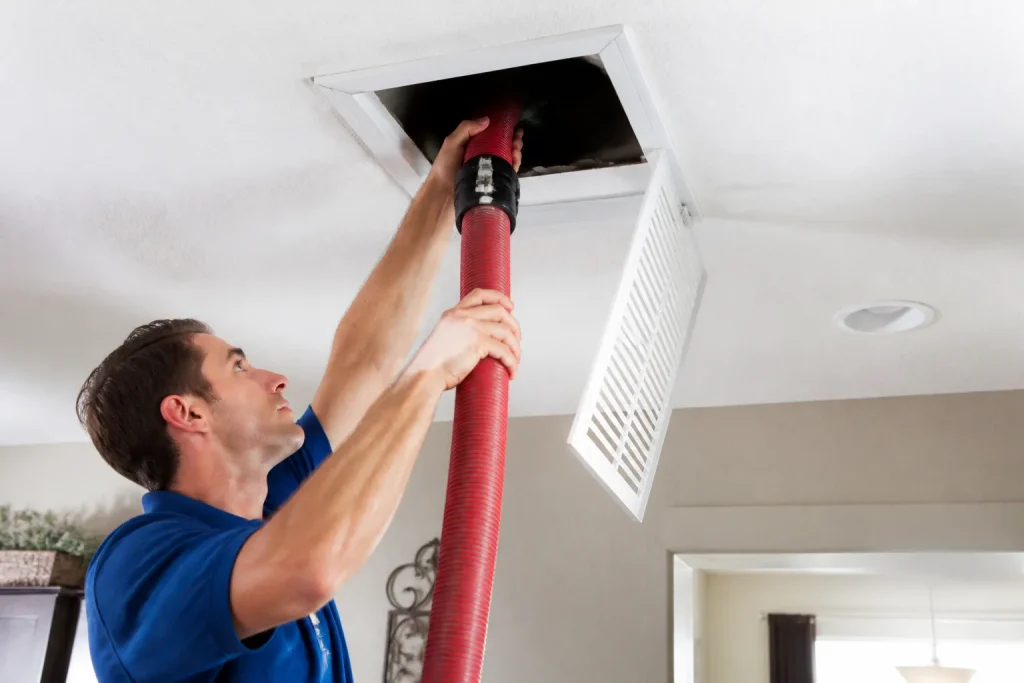
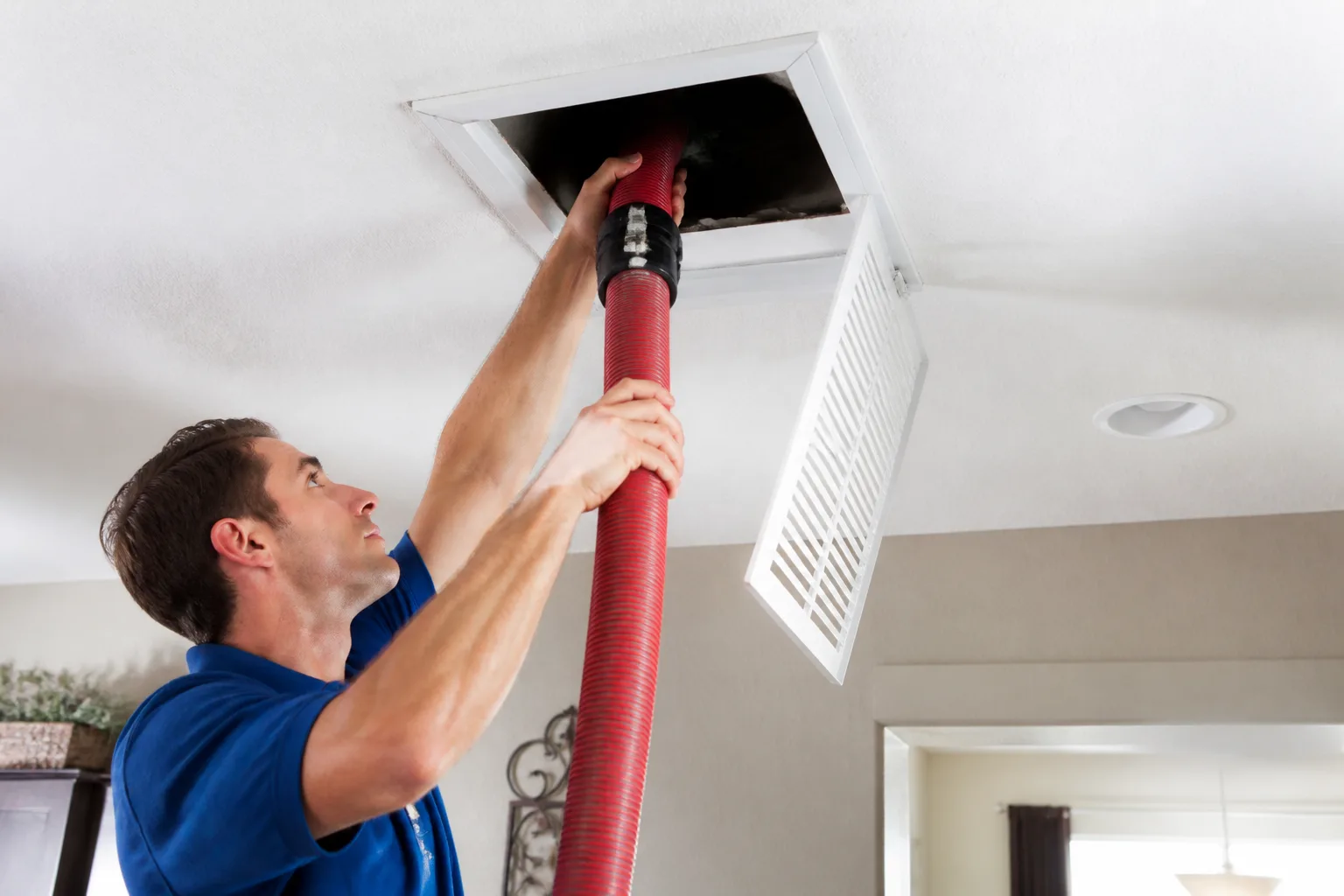
A Nikro system works by pulling air out of your duct network under negative pressure while HEPA filtration captures the debris it dislodges. The technician seals the registers and connects the vacuum to the main trunk or plenum. From there, the machine creates a pressure differential that pulls loosened contaminants toward the collection point instead of letting them drift back into your rooms. That’s the mechanical idea: generate enough airflow, and keep the exhausted air clean.
Two numbers matter more than the logo on the machine.
- CFM rating. CFM stands for cubic feet per minute. It measures the volume of air the unit can move. A higher CFM doesn’t automatically mean a better clean, but a low-CFM portable unit struggles to create meaningful negative pressure in a residential duct system, and that limits what it can actually remove.
- Filter integrity. HEPA filters need to be seated correctly, sealed, and in good condition. A filter that’s damaged or improperly installed lets fine particles pass straight through the exhaust and back into your home. The machine is only as clean as its weakest seal.
The practical result of a correctly set-up Nikro system is visible, not just claimed. That’s why asking for before-and-after photos of your own ducts, not stock images, is a fair request. In our experience, a technician who’s confident in their extraction setup is happy to show you.
Source removal vs. contact vacuum cleaning: what’s the difference?
Source removal means physically dislodging and extracting the accumulated debris from the duct surfaces so it leaves your system entirely. Contact vacuum cleaning means running a vacuum head across accessible interior surfaces, which removes what it touches but often leaves the settled material further down the run untouched. The two are not the same service, even though both get called “duct cleaning” on a quote.
The National Air Duct Cleaners Association (NADCA) defines source removal as the standard for a legitimate cleaning. That’s the method a Nikro system is built around: agitation tools loosen the debris, negative pressure pulls it out, and the filter captures it. A technician using contact vacuum only, or relying on a consumer-grade portable unit without true negative pressure, can leave your ductwork looking better at the register and no cleaner deeper in.
For a Fort Wayne home with a forced-air furnace, the ducts run through unconditioned and conditioned spaces alike, and the accumulated dust, pet hair, and construction residue can settle unevenly. Surface-only cleaning misses the parts that matter most.
What should a technician using Nikro equipment do before, during, and after the job?
Equipment quality is a floor, not a ceiling. The schedule a competent technician follows is what turns a good machine into a good clean.
- Before: inspect with a camera. A small inspection camera should go into the supply and return runs to see what’s actually there. That establishes what needs cleaning and whether any damaged or disconnected sections need attention first.
- Before: place and seal access points. The technician cuts access points where the trunk and branch lines need them, then seals registers and openings not in use, so the negative pressure does its job rather than leaking out.
- During: protect the air handler. The furnace or air handler should be isolated or protected so dislodged debris can’t get pulled into the blower or the heat exchanger.
- During: verify negative pressure. The technician should confirm the system is under negative pressure before starting source removal. This is the step that separates a real extraction from a vacuum running in the same room.
- After: re-seal and test. Access points get sealed, connections checked, and airflow tested. Some jobs also call for a sanitizing treatment, especially where contamination or odor is present.
When a company in Fort Wayne tells you they use professional-grade equipment, those five steps are what to ask about. A machine can’t finish a job its operator doesn’t run properly.
What should Fort Wayne homeowners ask to verify the equipment claim?
Any company can say “professional-grade.” The useful test is whether they can answer specific questions about the gear and the process. A technician who works with Nikro or Rotobrush systems day to day can tell you what they’re using and how. Here’s what to ask before booking.
- What equipment brand and model do you use, and can you describe the CFM and HEPA filtration setup?
- Do you perform source removal, and are you familiar with the NADCA standard for it?
- Will you inspect with a camera before cleaning and show before-and-after photos of my actual ducts?
- Does your quote price the whole system, or is it priced per vent? A per-vent quote almost always understates the work.
- How do you protect the furnace or air handler during extraction?
- What happens if you find damaged or disconnected duct sections during inspection?
That last question matters more than it sounds. A cleaning exposes problems a vacuum alone can’t fix. If a company can’t offer repair, you may be paying to clean ducts that leak the air back out afterward. For a deeper look at how the process should go, see our guide to air duct cleaning. Fort Wayne homeowners can also review our Duct Cleaning Fort Wayne overview before comparing quotes.
How does Nikro equipment support duct repair and sanitization?
A Nikro extraction system integrates well with repair and sanitization work because it can create and hold negative pressure while technicians are cutting into or reconnecting duct sections. That matters when a job isn’t just surface cleaning but full-system restoration. Once the source material is removed, the technician can address disconnected joints, crushed sections, or gaps at the plenum before sealing things back up and treating the system with a product like those from Abatement Technologies or Guardsman.
Post-clean air-quality improvements, such as filtration or humidity control, can then be added with recognized products like Honeywell or Aprilaire. The advantage of doing all three steps (cleaning, repair, and protection) with one provider is that nobody’s passing the work to a second company and losing the thread. A repaired, sealed system holds pressure better too, which is why cleaning a leaking duct network without fixing it is only half a job.
We name the equipment brands so you can verify them, and we perform structural duct repair as part of the service rather than as an afterthought. If you’re in Fort Wayne and want to see what that looks like for your home, our Fort Wayne page covers the local picture.
When should you call a pro instead of handling this yourself?
You can reach into a register and clear visible lint or dust from a return grille. That’s fine. Beyond that, duct cleaning requires equipment that most homeowners don’t own and shouldn’t try to improvise with a shop vac. The real limits are physical: heat exchangers, electrical connections at the air handler, and gas lines on a furnace are not places to work with a hand tool and good intentions. If your inspection turns up anything near those components, stop and call a trained technician.
You should also call a pro if you notice persistent musty odors from the vents, visible dust blowing from the registers, or a family member with allergies whose symptoms ease when they’re away from home. If your dryer is taking longer than usual to dry a load, that’s a separate system and a genuine safety concern. A clogged dryer vent is a leading cause of residential house fires, which is why we treat dryer vent cleaning as its own service rather than an add-on.
Related services in Fort Wayne: air duct cleaning, air duct repair, and dryer vent cleaning, all available through one provider.
The Bottom Line
Nikro equipment is a real performance tool, but the cleaning standard lives in the technician’s method: camera inspection, sealed access points, verified negative pressure, protected air handler, and a sealed system afterward. Ask any Fort Wayne company that claims professional-grade equipment to describe that sequence. A good answer is specific and confident. A vague one is a signal to keep looking.
If you’re in Fort Wayne and need help, Duct Cleaning Fort Wayne offers free estimates. Call (844) 951-3807. We answer 24/7. Fast dispatch from 7am to 7pm, Sunday through Friday. The written estimate sets the final price before any work starts.
Frequently Asked Questions
Cleaning a whole residential system typically runs several hundred dollars, depending on home size, the number of registers, and whether repair is needed. We price per system, not per vent, so the written estimate you receive covers the whole job. Call (844) 951-3807 for an exact quote. Estimates are free.
Cheap quotes usually reflect per-vent pricing or contact vacuum work with portable units that can’t create true negative pressure. The low number is real, but the cleaning may not reach the parts of your Fort Wayne duct system that matter. Ask what method and equipment they use before comparing prices side by side.
Ask for before-and-after photos of your own ducts, not stock images. A technician using Nikro or Rotobrush equipment correctly will inspect before cleaning and can show you what was removed. If a company can’t show photos of your system, that’s a fair reason to ask why. Call (844) 951-3807 to book a clean with photos included.
Many homes go several years between cleanings, but households with pets, allergy sufferers, recent renovation dust, or visible dust at the registers benefit from sooner. A camera inspection tells you what your ducts actually need better than a fixed schedule. Call (844) 951-3807 and we’ll give you an honest assessment.
Written by the team at Duct Cleaning Fort Wayne.
Need Air Duct Cleaning Help?
Call Duct Cleaning Fort Wayne - licensed & insured, with free written estimates in Fort Wayne.
(844) 951-3807